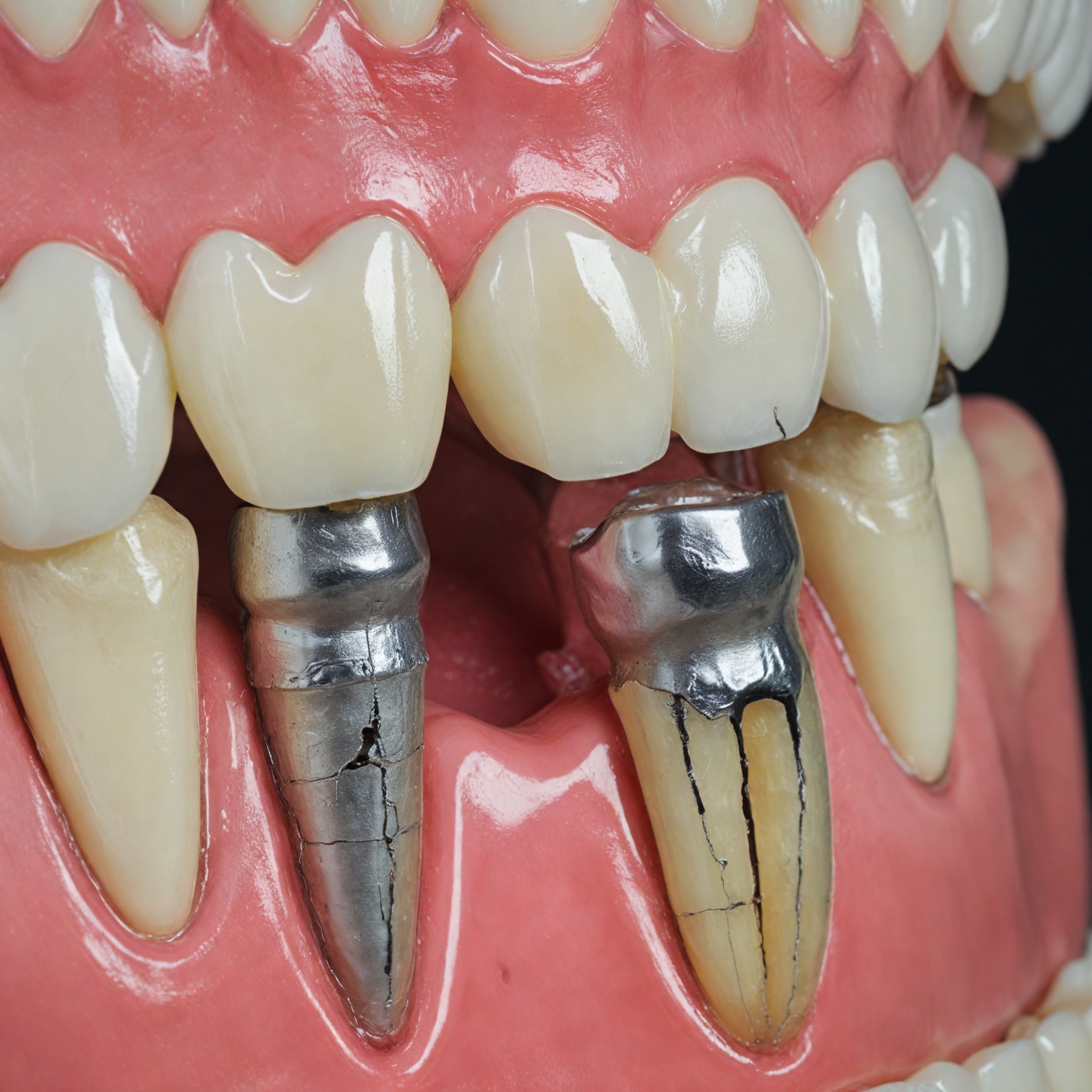
Summary
Cracked teeth syndrome (CTS) is a dental condition characterized by incomplete fractures of a tooth that do not result in full separation of the crown, often causing pain and sensitivity during biting or temperature changes. It primarily affects posterior teeth, especially mandibular molars, due to their anatomical structure and the occlusal forces they endure. The condition is notable for its diagnostic challenges, as cracks can be microscopic and symptoms vary widely, sometimes mimicking other dental pathologies, which can delay appropriate treatment.
The etiology of cracked teeth is multifactorial, involving both intrinsic anatomical vulnerabilities—such as deep occlusal grooves, cusp inclination, and extensive restorations—and extrinsic factors including occlusal stress from bruxism, aging-related fatigue, trauma, and iatrogenic causes like root canal therapy and restorative procedures. These factors contribute to the initiation and propagation of cracks, with the potential to progress to pulp inflammation or tooth loss if left untreated.
Diagnosis relies on a combination of clinical evaluation, including bite tests and magnification techniques, alongside imaging modalities such as transillumination and dental dyes, due to the often subtle and hidden nature of cracks. Management strategies range from conservative restorations for minor cracks to endodontic therapy and full-coverage crowns for more extensive damage, with extraction reserved for severely compromised teeth. Early identification and intervention are critical to improve prognosis and preserve tooth function.
Controversies in the field primarily concern optimal diagnostic protocols and treatment planning, especially for teeth with minimal symptoms or vital pulp, as standardized guidelines remain limited. Additionally, the role of iatrogenic factors, such as the impact of endodontic techniques and restorative materials on crack development, continues to be an area of ongoing research and clinical debate.
Anatomy and Structural Considerations
Cracked teeth syndrome (CTS) is closely related to various anatomical and structural features of teeth that predispose them to crack formation. Certain tooth structures, such as deep occlusal grooves, large vertical radicular grooves, bifurcations, and extensive pulp spaces, are inherently weaker due to incomplete fusion of calcified areas during development, making them susceptible to cracks. Additionally, cusp inclination, particularly the tilt of the cusp tip, is a key anatomical parameter influencing the risk of CTS. Mandibular molars, especially the second and first molars, are the most commonly affected teeth, followed by maxillary premolars and molars. The mandibular first molar’s vulnerability has been partly attributed to the wedging effect exerted by the opposing maxillary mesio-palatal cusp onto the mandibular molar’s central fissure, creating focal stress points that favor crack initiation.
Structural defects often arise in teeth with extensive intracoronal restorations. These restorations may increase stress on the remaining tooth structure, particularly when the restoration retains less sound tooth tissue, thereby promoting crack propagation. Subgingival or minimally expanded fracture planes may not be visible externally, complicating diagnosis and increasing the risk of untreated cracks that may eventually lead to cuspal fracture. The placement of intracanal posts and obturation techniques during root canal therapy may also contribute to crack development by imposing additional stress on the dentin. Excessive occlusal forces, such as those exerted during biting or grinding, further exacerbate the risk of cracks by inducing micro-movement and stress within structurally vulnerable areas. Moreover, structural weaknesses compounded by restorative procedures or traumatic events like tooth extraction can predispose the tooth to crack formation.
Understanding these anatomical and structural considerations is crucial in recognizing the etiology of CTS and guiding appropriate clinical interventions to preserve tooth integrity and function.
Causes and Risk Factors
Cracked teeth arise from a combination of iatrogenic and noniatrogenic factors that compromise the structural integrity of the tooth. The etiology of cracked tooth syndrome (CTS) is multifactorial, involving both internal tooth conditions and external forces acting upon the dentition.
Iatrogenic Factors
Root canal therapy is one of the prominent iatrogenic causes of cracks and dentin defects. During endodontic treatment, mechanical contact between instruments and the canal walls places stress on the dentin, increasing the risk of cracks. Additionally, performing root canal therapy in a dry environment, even briefly, may adversely affect dentin integrity and elevate the probability of CTS. Other contributory factors include the placement of intracanal posts, use of higher concentrations of sodium hypochlorite during irrigation, and various obturation techniques. Improper restorative procedures following endodontic treatment also play a role in the development of cracks.
Non-Iatrogenic Factors
Structural and Anatomical Considerations
Certain structural defects within the tooth predispose it to cracking. These include deep occlusal and vertical radicular grooves, bifurcations, extensive pulp chambers, and areas of incomplete fusion of calcified dental tissues formed during development. These local structural weaknesses diminish resistance to occlusal forces and facilitate crack initiation. Furthermore, the anatomical feature of cusp inclination, particularly the tilt of the cusp tips, has been identified as a significant risk indicator for CTS.
Aging and Fatigue
Age is a critical risk factor for cracked teeth, with a higher prevalence observed in individuals over 40 years old. Aging contributes to increased fatigue of dental hard tissues, reduced elasticity of dentin, and overall fragility of tooth structure, thereby enhancing susceptibility to cracks.
Excessive Occlusal Forces
Excessive occlusal forces generated during mastication or parafunctional habits are major contributors to tooth cracking. These forces cause micro-movements and stress concentration on the enamel and underlying dentin, particularly on the chewing surfaces, leading to crack propagation. Such forces often originate from habitual bruxism (teeth grinding) or from biting on hard substances like ice, candy, or popcorn kernels. The continuous pressure and trauma inflicted by these forces can cause enamel fractures that extend into the pulp, resulting in irritation and pain.
Trauma and Physical Injury
Physical trauma, including injuries sustained from falls, sports accidents, or vehicle collisions, can exert sudden and excessive forces on teeth, causing cracks or fractures. These injuries may be visible or hidden within the tooth structure, necessitating thorough dental examination to assess the extent of damage.
Parafunctional Habits
Bruxism, often linked to stress and other psychological factors, applies repetitive and excessive pressure on teeth, increasing the risk of cracks over time. Besides fractures, bruxism can also damage existing dental restorations, such as fillings and crowns, further weakening the tooth structure. Similarly, habits like nail biting and chewing on pens or cheeks create localized stress points that predispose teeth to micro-cracks and possible infection.
Epidemiology and Prevalence
Cracked teeth are a common dental condition, with incidence rates reported at approximately five fractured teeth per 100 adults per year. The occurrence of cracked teeth varies regionally, with a regional comparison within the United States ranking the Southwest as the second highest in prevalence, following the South Central region. Demographic data indicate that cracked teeth most frequently affect individuals aged between 45 and 54 years, with some studies extending the highest prevalence range to 50–59 years. The prevalence tends to increase with age, suggesting age as a significant risk factor. In a sample of 893 patients presenting with cracked teeth, 41% exhibited documented symptoms, with males comprising 49% of cases. Ethnically, Caucasians accounted for 58.9% and African Americans for 21.1% of the population affected by cracked teeth, highlighting demographic disparities in prevalence.
Anatomically, mandibular molars are the most commonly involved teeth, followed by maxillary premolars and molars. The mandibular first molar is especially prone to cracking, possibly due to the wedging effect exerted by the opposing maxillary mesio-palatal cusp onto the mandibular molar’s central fissure. Additionally, cracked teeth have been identified following the cementation of porcelain inlays, with unrecognized cracks possibly contributing to restoration debonding. Risk factors for cracked teeth are multifactorial, including natural causes such as tooth form, age, and wear patterns, as well as iatrogenic causes like tooth preparation procedures. Diagnosis primarily relies on clinical symptomatology, which includes localized pain during chewing or biting, unexplained sensitivity to cold, and generalized pain upon mastication.
Clinical Presentation and Symptoms
Cracked teeth can present a wide range of symptoms, often making diagnosis challenging due to the variability and sometimes subtlety of clinical signs. The most common symptoms include sharp or sudden pain when biting down, which typically occurs because chewing forces cause the crack to slightly open, irritating the inner layers of the tooth. This pain is often described as sharp and may subside when the pressure is released. In some cases, patients experience a characteristic pain on the “release” of biting pressure, which is considered pathognomonic for cracks that extend into the dentin of a vital tooth.
Temperature sensitivity is another frequent symptom, with patients reporting discomfort or pain when teeth are exposed to cold or hot stimuli, as well as to sweet foods and drinks. This sensitivity may arise due to exposed dentin or micro-cracks allowing stimuli to reach the pulp. However, some cracked teeth may remain asymptomatic, complicating detection and delaying treatment.
Other reported symptoms include spontaneous pain without any obvious trigger, discomfort when chewing sticky or hard foods, and bite pain that worsens with increased force. Pain may sometimes radiate to adjacent teeth, making it difficult for patients and even clinicians to localize the exact source of discomfort. Additionally, some patients may experience minimal or no mobility of the affected tooth, while others may report tenderness on palpation or percussion.
Clinically, the presentation of cracked teeth can be influenced by the direction and depth of the crack, which are often difficult to predict. Cracks are commonly oriented mesiodistally and frequently involve posterior teeth, especially mandibular molars and maxillary premolars, often associated with large restorations. The presence of intracoronal restorations can predispose teeth to cracks and may also complicate the clinical picture, sometimes mimicking post-treatment sensitivity or occlusal interferences.
Patients with cracked teeth sometimes report sharp pain during activities such as breathing through the mouth or drinking cold fluids, and relief can sometimes be obtained temporarily by biting on moist gauze or cloth until professional care is sought. It is important to note that topical oral analgesics or placing aspirin directly on the tooth are not recommended for symptom relief.
Due to the diverse and sometimes ambiguous symptomatology, thorough clinical evaluation supplemented with auxiliary diagnostic tools is essential for accurate diagnosis. Early symptoms may be blurred or nonspecific, which often delays definitive identification and management. Proper diagnosis is crucial, as untreated cracked teeth may lead to worsening pain, pulp inflammation, or eventual tooth loss.
Diagnostic Methods
Diagnosis of cracked teeth syndrome (CTS) involves a combination of visual inspection, clinical testing, and advanced imaging techniques due to the often subtle and variable presentation of cracks. Visual diagnostic methods alone are insufficient for definitive identification, as cracks may be microscopic or obscured by restorative materials and dental anatomy.
Visual and Magnification Techniques
Experienced clinicians frequently use microscopes with magnifications around ×16 (ranging from ×14 to ×18) to evaluate enamel cracks, as this level of magnification provides an optimal balance for detecting subtle fractures while allowing sufficient field of view. High-magnification microscopy has demonstrated high specificity (92.9%) and positive predictive value (96.7%) in crack detection, outperforming low-magnification microscopes, which show markedly lower accuracy (52.2%). Macrophotography also contributes to improved diagnostic accuracy when combined with magnification. Nonetheless, despite these advantages, visual methods alone cannot reliably confirm crack presence or extent, highlighting the need for adjunctive approaches.
Clinical Examination and Functional Tests
Clinical examination includes thorough inspection of the tooth under moist conditions to avoid crack propagation caused by drying and desiccation. Bite tests are widely used indirect diagnostic tools that help isolate symptomatic cusps and identify cracks by reproducing the patient’s pain. These tests can be performed with orange wood sticks, cotton rolls, rubber abrasive wheels (e.g., Berlew wheels), or devices like the head of a number 10 round bur held with cellophane tape. The patient is asked to bite selectively on different cusps, allowing the clinician to pinpoint discomfort caused by crack flexure.
Another indirect diagnostic approach involves placing composite resin over the suspected tooth without etching or bonding to act as a temporary splint. The reduction in patient discomfort upon biting indicates stabilization of the crack and aids in diagnosis. Wedging techniques can further differentiate cracked teeth from fractured cusps or split teeth by assessing segmental mobility.
Imaging and Auxiliary Diagnostic Tools
Radiographs (X-rays) often have limited utility for detecting cracks because the fractures may be oriented in planes not visible on two-dimensional images. Therefore, alternative imaging modalities such as transillumination with fiber-optic light and application of dental dyes (e.g., methylene blue) are employed to reveal crack lines. Ultrasound imaging has shown promise in experimental settings for visualizing cracks in simulated tooth structures and may become a valuable diagnostic aid in the future.
Assessment Procedures and Reliability
Diagnostic procedures are generally performed in separate sessions for each method, with at least a 10-day interval to prevent cross-method influence and to maintain tooth integrity by storing specimens in moist conditions between sessions. Intra-rater reliability for visual and microscopic detection ranges from moderate to substantial, while inter-rater reliability is fair, indicating that clinical experience significantly affects diagnostic accuracy. Experienced dentists demonstrate greater precision in identifying cracked teeth, underscoring the importance of training and expertise.
Treatment and Management
Management of cracked teeth requires a tailored approach based on the severity, location of the crack, and symptoms presented by the patient. Treatment goals primarily focus on relieving pain, preventing crack progression, and preserving the tooth whenever possible.
Initial Postoperative Care and Instructions
Strict adherence to postoperative care instructions is crucial for successful management, particularly after endodontic treatment of cracked teeth. Recommended protocols include the use of analgesics for pain control, maintaining optimal oral hygiene, following a soft diet, and avoiding chewing on the affected side until permanent restoration is placed. Patients are also advised to maintain regular dental check-ups to monitor the tooth condition and promptly report any discomfort to the treating dentist.
Restorative Treatment Options
The choice of restorative treatment depends on crack extent and pulp status. For minor cracks confined to enamel or dentin, conservative options such as bonding or composite fillings can be effective to seal the crack and restore function. However, cracks that extend deeper or involve pulp compromise often require endodontic therapy combined with a definitive restoration.
Full crown placement is considered the most reliable restorative approach following root canal treatment of cracked teeth, offering maximum protection by stabilizing the tooth structure and reducing flexing forces that exacerbate cracks. Studies report higher survival rates for teeth restored with crowns (up to 95% survival over 10 years) compared to composite restorations, which have been associated with a higher risk of extraction. However, clinical decision-making should consider factors such as tooth location, crack severity, and patient-specific risks, with treatment planning tailored on a case-by-case basis.
Endodontic Treatment and Prognosis
When pulpitis or pulp necrosis occurs due to crack extension, endodontic treatment is indicated. Current evidence suggests that endodontic therapy combined with appropriate restorative management can produce outcomes comparable to those of non-cracked root-filled teeth. Factors associated with higher survival rates include absence of preoperative spontaneous pain, minimal tooth mobility, and retained pulp vitality. Nevertheless, clinicians should counsel patients regarding the variable prognosis and the potential need for extraction if the crack progresses despite
Complications and Prognosis
Cracked teeth can lead to a variety of complications if left untreated, with the severity largely dependent on the extent and location of the crack. One major concern is that cracks may allow bacteria to enter the tooth pulp, potentially causing pulp infection and abscess formation. Such infections, if untreated, can spread beyond the tooth to the jawbone, facial muscles, tendons, and even fat tissues in the face and neck, posing serious health risks. However, it is important to note that not all cracked teeth exhibit symptoms initially, and some cracks may remain asymptomatic until pulp infection develops.
The prognosis of a cracked tooth is influenced by several factors, including the presence or absence of symptoms such as spontaneous pain, palpation discomfort, and tooth mobility. Teeth that show no pre-operative discomfort, maintain pulp vitality, and have minimal mobility generally have higher survival rates over time. Conversely, cracks that extend below the gum line are associated with a poor prognosis, as they are often untreatable and may necessitate tooth extraction. Early diagnosis and intervention are therefore crucial to prevent progression and tooth loss.
Vertical root fractures, a specific type of crack that originates in the root and extends toward the chewing surface, frequently present minimal symptoms and can remain undetected until infection of the surrounding bone and gum occurs. Such fractures typically result in a poor prognosis and are difficult to manage conservatively.
In cases where extraction is unavoidable due to the extent of the crack, modern dental technology offers effective replacement options such as implants and bridges, which help restore function and aesthetics. Overall, cracked teeth are recognized as a significant cause of tooth loss in developed countries, ranking as the third most common reason, underscoring the importance of early and accurate detection.
Warning Signs and Urgent Care Indicators
Cracked teeth can present with a range of symptoms that may indicate the need for urgent dental care. One of the most common warning signs is pain on biting, especially when chewing hard or sticky foods. This occurs because the pressure forces the crack to open slightly, irritating the tooth’s inner layers and causing sharp, sudden pain that often subsides once the pressure is released. Additionally, some patients report pain on the release of biting pressure, a symptom that is considered pathognomonic for cracks extending into the dentin of a vital tooth.
Other notable symptoms include erratic pain when chewing, sensitivity to temperature extremes (hot or cold), and occasional spontaneous pain that can linger and interfere with sleep. In some cases, patients may experience discomfort when breathing through the mouth or drinking cold fluids. In such situations, biting on clean, moist gauze can provide temporary relief until professional care is obtained.
It is important to note that cracked teeth do not always cause symptoms, and when symptoms are present, they can sometimes be confused with other dental issues. Pain may also radiate to adjacent teeth, making it challenging to pinpoint the exact source without a thorough dental examination. Diagnostic tools such as laser irradiation have been employed to provoke pain responses and help locate cracks; however, symptoms do not always correlate perfectly with the presence or severity of cracks, underscoring the necessity for comprehensive diagnostic approaches.
Given that cracked teeth can progress to pulp irritation and irreversible damage, any sharp or persistent dental pain should be considered a potential dental emergency requiring prompt evaluation and treatment. Immediate care is crucial to prevent further complications such as pulp necrosis or tooth loss. Patients are advised against using topical oral pain medications or placing aspirin directly on the affected tooth, as these practices may cause tissue damage.
Prevention
Preventing cracked teeth involves understanding and addressing the multiple factors that predispose teeth to fractures. The etiology of cracked teeth is multifactorial, with natural predisposing features—such as the lingual inclination of mandibular molar cusps, steep cusp/fossa relationships in maxillary premolars, bruxism, clenching, extensive attrition, and abrasion—and iatrogenic causes related to dental procedures, including cavity preparation and the use of rotary instruments, contributing to tooth vulnerability.
One of the primary behavioral risk factors is bruxism, or teeth grinding, which can exert considerable pressure on teeth, gradually leading to fractures and damage to dental restorations like fillings and crowns. To mitigate these effects, the use of mouthguards is widely recommended, particularly during sports or for individuals who grind their teeth at night. Mouthguards provide a cushioning effect that absorbs impact and protects teeth from trauma, significantly reducing the risk of cracks and other dental injuries.
Lifestyle modifications and mindful habits also play a crucial role in prevention. Avoiding hard foods such as ice, popcorn kernels, and hard candies, as well as refraining from chewing on non-food items like pens, nails, or cheeks, can help minimize mechanical stress on teeth. Additionally, cutting hard fruits into smaller pieces rather than biting directly into them reduces the risk of cracks. Maintaining good oral hygiene and regular dental visits enable early detection of even minor cracks, preventing progression to more severe damage.
For those with a history of cracked teeth or dental restorations, adherence to post-operative care protocols—including a soft diet, avoiding chewing on the affected side until permanent restoration placement, managing postoperative pain with analgesics, and maintaining optimal oral hygiene—is essential to promote healing and prevent further fractures.
The content is provided by Jordan Fields, Lifelong Health Tips