Summary
The National Institutes of Health (NIH), the United States’ foremost federal agency for biomedical and public health research, has recently come under intense scrutiny following the announcement of substantial funding cuts and a controversial policy capping indirect cost reimbursements at 15 percent for all research grants, effective February 2025. These indirect costs, which traditionally cover essential infrastructure and administrative expenses necessary for maintaining research facilities, have historically averaged around 30 percent, with some institutions receiving rates exceeding 50 percent. The new cap represents a significant reduction intended to redirect funds toward direct scientific research but has sparked widespread concern among universities, research institutions, and scientific communities about its potential to undermine the research enterprise.
The funding changes coincide with proposed deep cuts to the NIH’s overall discretionary budget and plans to consolidate its 27 institutes and centers into a smaller number, raising alarms about the agency’s capacity to support biomedical innovation effectively. NIH leadership, under Director Jay Bhattacharya—confirmed in early 2025—has defended the reforms as necessary for fiscal responsibility and promoting a culture of scientific dissent, while pledging to maintain the agency’s research excellence. However, his tenure has faced sharp criticism from Democratic lawmakers and research advocates, who argue that the cuts threaten scientific progress, employment, and the United States’ global leadership in health research.
Democratic members of Congress have been particularly vocal in opposing the funding reductions, emphasizing the economic and health impacts of curtailing NIH support. They highlight that NIH-funded research supports hundreds of thousands of jobs and drives billions in economic activity, while enabling breakthroughs in cancer, neuroscience, and emerging fields like artificial intelligence. Public and political discourse has been marked by contentious congressional hearings, public protests from NIH employees, and calls for accountability from agency leaders, reflecting a broader debate over the future priorities and governance of the nation’s premier biomedical research agency.
The controversy surrounding NIH funding cuts underscores a critical juncture in U.S. science policy, raising questions about balancing budgetary constraints with the need to sustain infrastructure vital for medical advances and public health. While NIH officials maintain that streamlined administrative costs free up resources for innovative science, critics warn that the scale and speed of the changes risk destabilizing the research environment and hindering the development of life-saving treatments.
Background
The National Institutes of Health (NIH) is the primary agency of the United States government responsible for biomedical and public health research. Established in 1887 and operating under the Department of Health and Human Services (HHS), the NIH plays a critical role in funding and advancing medical research across the nation. Its director holds significant responsibility in shaping the agency’s strategic direction by leading the institutes and identifying emerging research needs and collaborative opportunities. As the largest funder of biomedical research globally, the NIH’s grants form the foundation of basic science knowledge that drives major health advances. Funding for the NIH is appropriated by Congress following a rigorous process that involves input from institute and center leaders, scientists, and NIH management to prioritize promising research areas and initiatives. However, the allocation of NIH appropriations has increasingly become a subject of scrutiny and debate, with concerns about congressional influence on funding decisions and the potential for budget cuts impacting research priorities.
A recent policy change has further intensified these concerns. The NIH announced a cap on indirect costs—also known as facilities and administrative (F&A) costs—at 15 percent for both new and existing grants, effective from February 10, 2025. Indirect costs cover essential infrastructure and administrative support, including compliance with federal regulations, maintenance of shared facilities, and access to electronic resources vital for scientific work. Historically, NIH indirect cost rates have averaged around 30 percent, with some institutions negotiating rates exceeding 50 percent to sustain research infrastructure. The new cap represents a significant reduction from current levels, raising alarms among research institutions and higher education associations about the potential impact on the scientific enterprise.
Amidst this backdrop, Jay Bhattacharya, the NIH’s nominee for director, highlighted during his confirmation hearing the agency’s previous culture characterized by “coverup, obfuscation, and a lack of tolerance for ideas that differed from theirs.” He pledged to promote a culture of free scientific discourse and dissent, emphasizing the importance of diverse perspectives in advancing science. This commitment comes at a time when the NIH faces intense scrutiny over its funding policies and leadership approach, setting the stage for ongoing debates about the agency’s future direction.
Events Leading to the Inquiry
In the years preceding the congressional inquiry, the National Institutes of Health (NIH) faced significant scrutiny over its funding policies and administrative decisions. Early concerns surfaced around 2019 with discussions highlighting foreign threats to taxpayer-funded research and the need for improved oversight and policy reforms within NIH. These concerns intensified as budget proposals and funding adjustments revealed a shifting landscape for NIH-supported research.
A pivotal development occurred in 2023 and 2024 when the NIH introduced a controversial cap on indirect cost rates for research grants. The new policy, announced in late 2024, set a uniform cap of 15 percent on indirect costs for both new and existing grants starting February 10, 2025. This represented a drastic reduction from previous rates—historically averaging around 27 to 30 percent, with some institutions negotiating rates exceeding 50 percent—and was justified by NIH as a measure to allocate a greater portion of funding directly to scientific research, citing comparable caps used by private foundations like the Gates Foundation and Robert Wood Johnson Foundation. The agency estimated that this cap could save approximately $4 billion annually.
However, the policy was met with substantial opposition from research institutions and higher education associations, which argued that such a cap would undermine the ability to sustain critical research infrastructure and administrative support. Critics also pointed out that this unilateral decision failed to consider the varied financial needs of institutions and could hamper scientific progress. The controversy was further amplified by the broader context of proposed deep cuts to the NIH discretionary budget—amounting to nearly 40% reductions in some proposals—and plans to consolidate the agency’s 27 institutes and centers into just eight. These proposals raised alarm among lawmakers and stakeholders about the future capacity of NIH to support biomedical research effectively.
Amid these tensions, NIH leadership, including its Deputy Director Dr. Bhattacharya, faced criticism for decisions perceived as politically motivated, including pauses on certain grants related to diversity and equity research. Bhattacharya’s remarks during hearings were noted as his first direct public statements to NIH officials and researchers since assuming his role, reflecting an administration intent on reshaping NIH priorities.
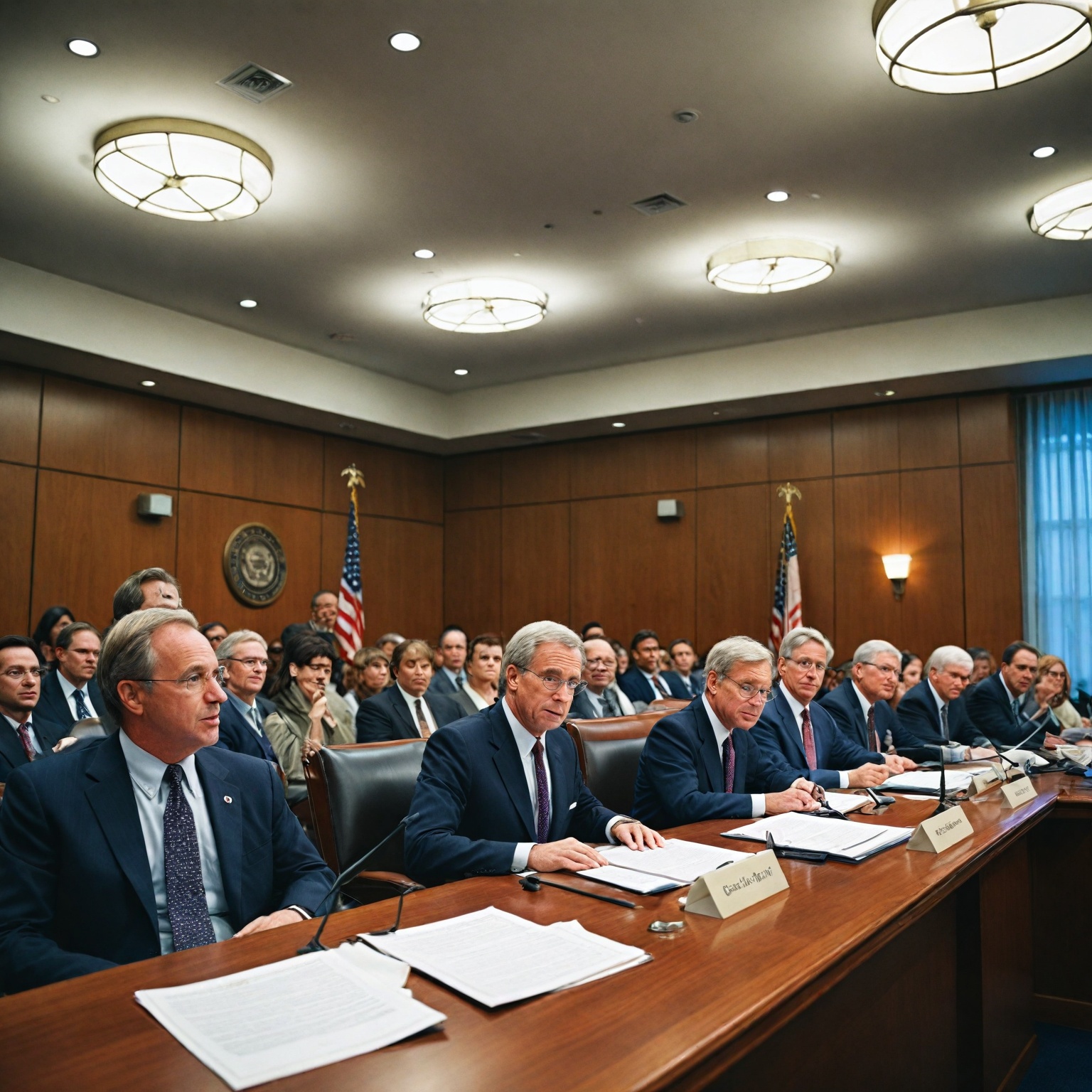
The culmination of these funding controversies, administrative changes, and concerns over NIH’s direction set the stage for congressional inquiry and oversight hearings in 2024 and 2025. These sessions aimed to address questions surrounding the rationale for funding cuts, the impact of indirect cost rate caps, and the broader strategic vision for the NIH moving forward. The inquiry highlighted a growing political and institutional debate over how best to balance fiscal responsibility with the imperative to advance biomedical research in the United States.
Democratic Party Response
The Democratic Party has been vocally critical of the funding cuts to the National Institutes of Health (NIH) proposed under the Trump administration, emphasizing the detrimental effects these reductions could have on biomedical research and public health. During a series of congressional hearings in 2025, Democratic senators grilled NIH leadership, particularly Health and Human Services Secretary Robert F. Kennedy Jr., over the administration’s budget proposals, expressing concerns about the potential impact on critical research programs and the broader scientific community.
Senator Patty Murray, a prominent Democrat from Washington state, underscored the economic and scientific consequences of the cuts. She highlighted that NIH-supported research accounted for over 412,000 jobs and generated nearly $93 billion in economic activity in fiscal year 2023, including $1.29 billion in NIH funding supporting nearly 12,000 jobs in her state alone. Murray condemned the administration’s approach, labeling indirect cost rate reductions as “massive indiscriminate cuts” that would set back progress on lifesaving research. She also criticized attempts to alter NIH’s existing policies on funding indirect costs, arguing that such changes would undermine the infrastructure essential for maintaining U.S. leadership in innovation and biomedical research.
Democrats further challenged NIH leadership for what they viewed as a lack of accountability regarding these cuts, noting that no agency head typically supports budget reductions that jeopardize their agency’s mission. They also pressed Kennedy on his controversial statements about vaccines amid a measles outbreak, intensifying scrutiny over the department’s stance on public health measures. The party’s response was amplified by a rare public rebuke from NIH employees themselves, who criticized the administration for politicizing research and undermining scientific integrity through these spending cuts.
In their defense of the NIH, Democrats emphasized the importance of peer review and scientific expertise in guiding research funding decisions, warning that drastic budget reductions could slow down scientific progress, lead to layoffs, and discourage young scientists from pursuing careers in research. Stanford University officials echoed these sentiments, stressing that severely cutting research funding would impair universities’ ability to foster environments conducive to groundbreaking discoveries in fields ranging from cancer research to artificial intelligence.
NIH Leadership and Administrative Response
The National Institutes of Health (NIH) operates under the leadership of the NIH Director, who provides overall scientific and administrative direction for the agency. The NIH Office of the Director acts as the central leadership hub, coordinating policies and programs across its 27 Institutes and Centers (ICs) and engaging with the scientific community, patient advocacy groups, and government stakeholders to set research priorities. Jay Bhattacharya, M.D., Ph.D., became the 18th NIH Director after being nominated by President-Elect Donald Trump in November 2024 and confirmed by the Senate in March 2025, officially taking office on April 1, 2025.
Upon his confirmation, Bhattacharya criticized the agency’s previous culture, describing it as one that “oversaw a culture of coverup, obfuscation, and a lack of tolerance for ideas that differed from theirs.” He pledged to foster an environment where scientific dissent and free speech are respected and encouraged, emphasizing that dissent is essential to the scientific process. Bhattacharya committed to promoting respectful disagreement and inclusivity of diverse perspectives, including those of early career scientists.
In response to significant budget cuts and reorganization plans under the previous administration, Bhattacharya expressed willingness to collaborate with Congress to address funding challenges and pursue more flexible approaches to medical research funding. However, his tenure has been met with criticism from some members of Congress and researchers who argue that the cuts undermine biomedical research capacity. For instance, Senator Baldwin sharply criticized the proposed $18 billion reduction in NIH funding, warning it would result in 15,000 fewer funded projects and accusing the administration of sabotaging biomedical research.
The NIH has enacted policies to reduce administrative overhead, including capping indirect costs paid to research institutions at 15%, down from rates that previously reached upwards of 50% of grant amounts. These indirect costs cover essential expenses such as equipment, facility maintenance, accounting, and personnel. While NIH officials contend that reallocating funds from administrative overhead has allowed an increase of over $4 billion annually for cutting-edge science, concerns remain about the impact of such cuts on research infrastructure and institutional capacity.
Researchers and institutional leaders have voiced concerns that these funding restrictions threaten the ability to maintain robust research environments, attract talent, and sustain crucial programs in areas such as cancer, neuroscience, artificial intelligence, and quantum computing. Given that NIH-funded research has contributed to nearly 99% of drugs approved between 2010 and 2019, the ramifications of funding reductions are viewed as potentially far-reaching for both scientific progress and public health.
NIH leadership is subject to oversight through public budget hearings conducted by Congressional appropriations committees. These hearings provide a forum for the NIH Director and IC directors to discuss agency accomplishments and justify budget requests. During such hearings, tensions have emerged regarding the proposed budget cuts, with lawmakers expressing concern over the potential loss of research programs and staff. Despite criticisms, NIH maintains that its peer review system, which emphasizes open discussion and expert debate, guides funding decisions and aims to maximize the impact of available resources.
Impact of Funding Cuts on Biomedical Research
The proposed funding cuts to the National Institutes of Health (NIH) and National Science Foundation (NSF) represent a significant restructuring effort that threatens to slash billions of dollars from scientific research funding, particularly through reductions in indirect cost reimbursements. The NIH’s recent policy to cap indirect costs—also known as facilities and administrative (F&A) costs—at 15% for both new and existing grants, marks a drastic departure from previously negotiated rates that averaged around 28%, with some institutions receiving rates above 50%. This cap is intended to redirect more funding towards direct scientific research, aligning with practices of private foundations that often provide substantially lower indirect cost rates.
Indirect costs cover essential expenses such as laboratory space, equipment maintenance, administrative support, and utilities—elements vital for sustaining a functional research environment. Cutting these costs would reduce operational funding for universities, hospitals, and research centers, potentially leading to layoffs of research personnel and slower progress in ongoing studies. Experts warn that the cuts could have a chilling effect on the recruitment and retention of young scientists, who may face greater difficulty establishing new labs and securing necessary resources.
The NIH is the largest global funder of biomedical and behavioral research, supporting critical advances in areas including cancer, neuroscience, artificial intelligence, data science, and quantum computing. Reductions in indirect cost funding threaten the infrastructure that underpins these fields, thereby undermining the United States’ competitive edge in innovation and scientific discovery. University leaders emphasize that maintaining a robust research infrastructure is crucial for groundbreaking discoveries, and that severe budget cuts to administrative overhead hinder the ability to attract and retain top scientific talent.
Moreover, these changes could have tangible consequences for medical progress and patient outcomes. NIH funding has been instrumental in the development of approximately 99% of new drugs approved between 2010 and 2019, including medications for heart disease. With the diminished support for indirect costs, research institutions may struggle to sustain the environments necessary for such transformative scientific advances.
Political and Public Discourse
The proposal to cut funding for the National Institutes of Health (NIH) ignited significant political and public debate, with Democrats vehemently opposing the measures during Senate budget discussions. Senator Patty Murray criticized the Trump administration’s approach, emphasizing concerns over the allocation of funds and highlighting the administration attorney’s defense of the cuts as an exercise of “broad discretion power of the executive branch”. The controversy was particularly focused on the effort to curtail funding for research overhead expenses at universities, a cost-cutting measure embedded in the administration’s 2026 budget proposal that drew sharp criticism from Democratic lawmakers.
Staff at the NIH expressed their dissent through an unusual public declaration demanding the agency’s director depoliticize the institution and reverse the spending cuts. Over 340 scientists and employees accused NIH officials and their superiors of politicizing science, underscoring a deep internal opposition to the funding reductions. This internal protest echoed broader concerns voiced by Kennedy, who warned that the proposed cuts would severely damage the agency’s ability to support critical research. Kennedy also faced intense scrutiny over remarks on vaccine-related public health issues amid the ongoing measles outbreak in the United States.
Critics of the funding reductions highlighted the broader consequences for medical progress, emphasizing the excitement and potential of recent scientific advances such as targeted cancer therapies, cellular reprogramming, tissue regeneration, and neurodegenerative disease research. They argued that politically motivated, line-item congressional reviews threaten to undermine this progress and jeopardize future breakthroughs. Representative Rosa DeLauro condemned the Trump administration and Elon Musk’s proposals as illegal under federal law, predicting that a federal judge would block the actions aimed at slashing billions in biomedical research funding. DeLauro portrayed these cuts as a direct threat to efforts combating devastating diseases and disorders, warning that such policies would cost lives and harm the United States’ scientific standing.
In early 2025, the NIH announced a sharp reduction in indirect funding, which alarmed researchers about potential disruptions to ongoing studies and clinical trials already feeling the strain. The policy was seen as a harbinger of difficulties for major research institutions nationwide. Despite these concerns, NIH officials maintained that they had increased funding for innovative science by over $4
The content is provided by Jordan Fields, Lifelong Health Tips