Summary
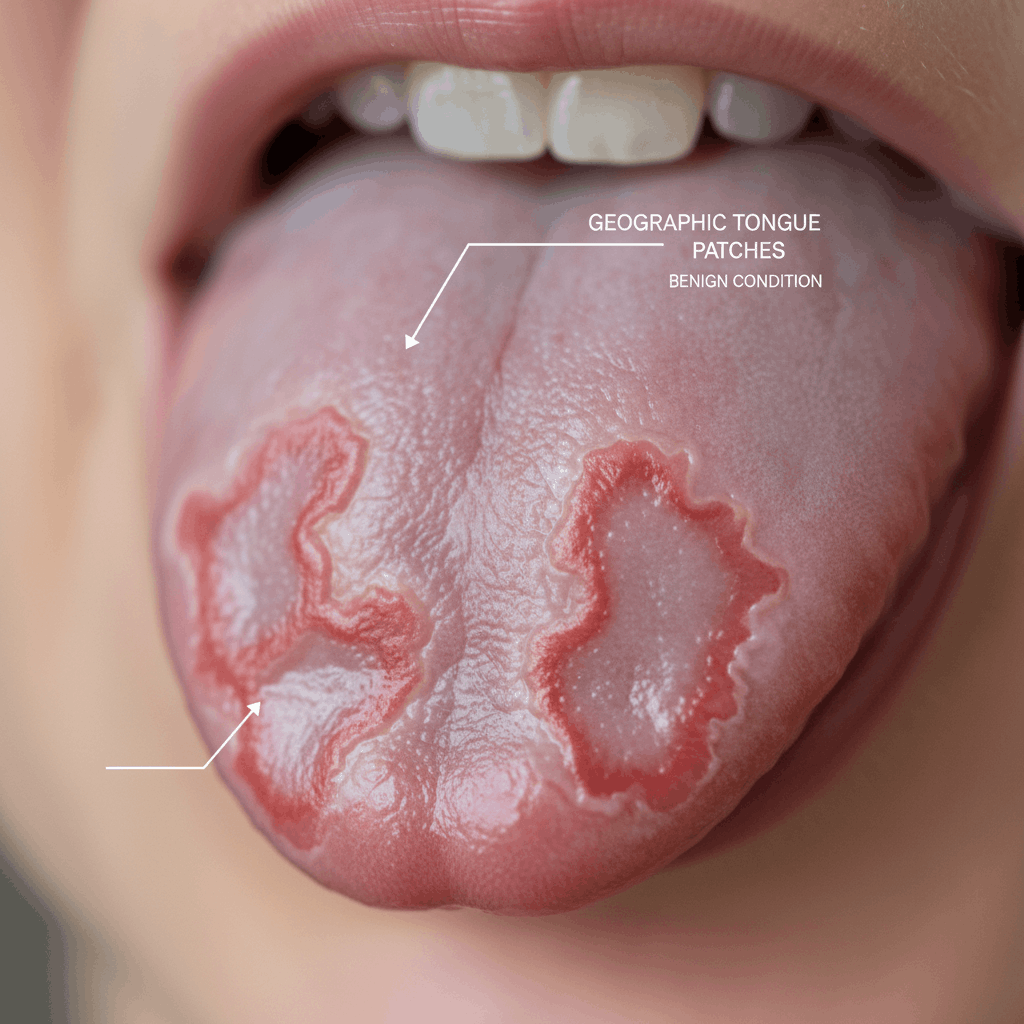
Geographic tongue is a benign inflammation of the tongue marked by irregular, map-like patches due to the loss of filiform papillae. While mostly symptomless, some may feel discomfort, particularly when eating spicy or acidic foods. This condition generally does not require treatment unless symptoms arise, as it is self-limiting. Its cause remains partially undefined but involves genetic and environmental factors, sharing characteristics with psoriasis. Approximately 1-3% of the population is affected, more commonly noted in young adults and with a slight female predominance. Similar lesions can occur elsewhere in the mouth, and geographic tongue may correlate with systemic conditions like psoriasis and celiac disease, necessitating careful diagnosis to rule out serious conditions.
Definition and Nomenclature
Geographic tongue, or benign migratory glossitis, presents as irregular patches on the tongue. It typically lacks symptoms and standardized treatments. The term “(oral) erythema migrans” can also refer to this, but it should not confuse it with the Lyme disease-related skin lesions. When similar lesions appear elsewhere in the mouth, they are referred to as ectopic geographic tongue or migratory stomatitis. Despite the differing locations, these conditions share the same clinical features and treatment approaches.
Epidemiology and Risk Factors
Geographic tongue shows varying prevalence, generally estimated at about 1% to 2.5% in the general population, higher among children. The peak incidence occurs in young adults aged 20-29, affecting slightly more females than males. Environmental factors, dietary habits, genetic predisposition, and psychological stress may contribute to its development. Notably, the condition is more common among individuals with certain genetic markers, with corticosteroid therapy linked to increased prevalence. Understanding these connections can aid in identifying risks and managing potential triggers.
Clinical Presentation
Geographic tongue typically manifests as asymptomatic red patches with white borders, primarily on the tongue. Although many experience no discomfort, some may feel burning sensations, particularly from certain foods. Ectopic lesions can occur in the mouth, resembling tongue lesions and presenting similar symptoms. While the condition is usually diagnosed visually, symptomatic cases may require consideration of other causes. Monitoring changes in lesion appearance can provide insight into potential dietary triggers.
Diagnosis and Management
Diagnosis of geographic tongue primarily involves visual examination to observe characteristic lesions. Careful differentiation from similar oral conditions like candidiasis is crucial, particularly for patients showing symptoms. While histopathology is not routinely necessary, it may support diagnosis in complex cases. Management focuses on reassurance and symptom relief through topical corticosteroids or avoidance of triggers. Keeping a food diary can help identify irritants, while addressing stress and maintaining overall oral health may improve symptom severity.
Prognosis and Future Directions
Geographic tongue is generally benign, with symptoms that often fluctuate but rarely lead to serious complications. Although it can affect quality of life for some, most patients experience spontaneous resolution of lesions. Given its associations with other conditions like psoriasis, a comprehensive approach that includes evaluation for underlying health issues is recommended. Further research into its genetic and immunological mechanisms is essential to elucidate pathogenesis and develop targeted therapeutic strategies.
Cultural and Psychological Factors
Geographic tongue intersects with psychological and social challenges, often worsening during periods of stress. Health professionals must recognize the condition’s visibility and provide care that alleviates patient concerns. Cultural patterns, including familial dietary habits, alongside hormonal influences, may also impact its prevalence and symptoms. Recognition of these factors can improve patient education and management strategies.
The content is provided by Jordan Fields, Lifelong Health Tips