Summary
Teeth-related nightmares, characterized by dreams involving teeth falling out, rotting, or other forms of dental distress, are a common but understudied phenomenon experienced by approximately one in eight children. These nightmares often reflect physical sensations such as dental tension or bruxism during sleep rather than general psychological distress, distinguishing them from other types of distressing dreams. Their prevalence in pediatric populations is notable, with sleep bruxism affecting up to nearly half of children in some studies, highlighting a significant intersection between oral health and sleep disturbances.
The causes of teeth-related nightmares are multifactorial, encompassing physiological factors like bruxism and poor oral health, as well as psychological triggers including stress, anxiety, and dental fear. Life changes, emotional distress, and familial patterns further contribute to the occurrence of these nightmares. The impact of such sleep disturbances extends beyond the night, potentially impairing daytime functioning by disrupting restorative sleep, increasing stress hormone levels, and influencing behavioral and cognitive outcomes in children.
Diagnosis typically involves a combination of caregiver reports and clinical evaluation, with polysomnography regarded as the gold standard for identifying sleep bruxism associated with these nightmares. Management strategies emphasize both physical and psychological interventions, including dental guards to prevent tooth damage, behavioral techniques to reduce anxiety, and education aimed at improving oral health and sleep hygiene. Early recognition and comprehensive care are important to mitigate the broader effects on children’s well-being.
Culturally, teeth-related nightmares have been documented since antiquity, with interpretations evolving from symbolic meanings in Ancient Greece to contemporary concerns influenced by societal ideals of dental appearance. Despite their ubiquity across cultures, research into the psychological, physiological, and social dimensions of these nightmares remains limited, underscoring the need for further study to better understand and address this prevalent childhood issue.
Definition and Characterization
Teeth-related nightmares, often referred to as TD (teeth dreams), are a specific category of dreams in which individuals experience imagery involving their teeth, such as teeth rotting, falling out, or other forms of dental distress. These dreams are considered common and nearly universal across cultures, yet they have received relatively little empirical investigation within dream research. Early interpretations of teeth-related dreams date back to Ancient Greece, where Artemidorus assigned distinct meanings to various parts of the oral cavity; for instance, losing teeth in a dream was associated with the payment of debts.
Recent studies suggest that sensations of tension or irritation in the teeth, gums, or jaws during sleep may influence the content of these dreams. Specifically, the sleeping mind may translate physical sensations of dental tension into emotionally salient images such as teeth decay or loss. This process might be linked to the activity of the amygdala during rapid eye movement (REM) sleep, which is involved in emotional processing and dream generation. Despite the association between dental irritation and teeth-related dreams, these nightmares appear to be unrelated to general psychological distress, unlike other types of distressing dreams such as those involving suffocation or falling.
Research involving undergraduate populations has confirmed the relationship between TD and dental irritation, particularly tension sensations upon awakening, while no significant connection was found between TD and overall sleep quality or psychological distress. Thus, teeth-related nightmares are characterized primarily by their link to physical dental sensations during sleep rather than by broader psychological factors.
Prevalence
The prevalence of sleep bruxism (SB) in children varies widely across studies, with reported rates ranging from 13% to 49%. This variation reflects the complex and multifactorial etiology of bruxism, as well as differences in diagnostic criteria, which typically include subjective observation, clinical history, and clinical examination. Notably, SB appears to be more common in children than in adults, with some studies indicating prevalence rates of up to nearly half of the pediatric population.
Specific investigations into adolescent populations have found an incidence rate of around 22.2%, with a higher prevalence among males according to multivariate analyses. Other research has documented a decrease in bruxism prevalence with age, ranging from 3.5% to 40.6%, independent of gender. Familial aggregation has also been observed, especially in the presence of chronic pain, and with gender-specific patterns in first-degree relatives affected by SB.
Causes and Triggers
Nightmares involving teeth can be influenced by a variety of psychological, environmental, and physiological factors. Emotional distress or anxiety is a common trigger for nightmares in children, stemming from situations such as conflicts with friends or disciplinary actions from parents or teachers. Additionally, significant life changes that are beyond a child’s control—like the arrival of a new sibling, moving to a new home, or changing schools—can also provoke these distressing dreams.
Stress and anxiety play a notable role in dreams about teeth falling out. Stress, whether from work, home, or upcoming major life changes such as new jobs, relocations, or family expansions, can heighten subconscious worries, leading to nightmares centered on tooth loss. Unlike general stress, anxiety involves prolonged excessive worrying that interferes with daily life and is strongly correlated with these types of dreams. Depression, characterized by long-term feelings of guilt and hopelessness, may also contribute to such nightmare content.
Bruxism, the involuntary grinding or clenching of teeth, is another physiological factor linked with teeth-related nightmares. It often occurs alongside sleep disturbances including parasomnias, snoring, and breathing difficulties. Psychological factors, family history, and environmental triggers likely contribute to the development of bruxism in children and toddlers. The physical effects of bruxism, such as disrupted sleep caused by grinding noises, can further exacerbate the occurrence of nightmares.
Dental fear is an additional psychological component that can indirectly trigger nightmares related to teeth. This fear is multifactorial, influenced by personality traits, past painful dental experiences, age, gender, and even parental dental anxiety. In children, dental fear can lead to avoidance behaviors, worsening oral health and potentially influencing sleep quality and nightmare frequency.
Finally, poor oral health itself may impact sleep quality in children, with untreated dental caries and other oral conditions linked to trouble sleeping. Chronic dental pain can disrupt sleep patterns, increasing the likelihood of nightmares, including those about teeth.
Psychological Impact and Daytime Effects
Teeth-related nightmares, such as dreams about teeth falling out, are often linked to heightened stress and anxiety levels. Stress—whether stemming from work, home, or major life changes like moving, marriage, or starting a new job—can manifest subconsciously through these distressing dreams. Anxiety, a more chronic condition characterized by excessive worrying and insecurity, may exacerbate these experiences, reflecting underlying fears about potential negative outcomes. Although research has not specifically explored connections between jealousy and teeth-loss dreams, it is recognized that such dreams generally carry a negative emotional charge and may indicate increased psychological distress.
The psychological impact of these nightmares extends into daytime functioning, as poor sleep quality associated with such distress can disrupt core biological processes essential for health. Quality sleep, which includes reaching deep, restorative stages, is crucial for maintaining cognitive function and behavioral regulation; disturbances may lead to symptoms that mimic behavioral issues or cognitive dysfunction in both children and adults. Furthermore, the interplay between stress-induced nightmares and sleep disruption can create a feedback loop, where elevated stress hormones like cortisol interfere with sleep patterns, and poor sleep quality, in turn, elevates cortisol levels, intensifying stress responses during the day.
These nighttime experiences and their associated sleep disturbances may contribute to daytime difficulties such as impaired concentration, mood swings, and reduced overall well-being. Additionally, individuals experiencing poor sleep often neglect health-promoting behaviors, including oral hygiene, potentially increasing risks of dental problems like periodontitis and gingivitis. Understanding the psychological and physiological consequences of teeth-related nightmares is important for developing interventions aimed at improving both mental health and daily functioning in affected children.
Diagnosis
The diagnosis of sleep bruxism (SB), particularly in children experiencing teeth-related nightmares or oral anxieties, relies on a combination of reported symptoms and clinical confirmation. The definitive diagnosis requires the observation of teeth grinding alongside consistent clinical signs, and is most accurately confirmed through polysomnography (PSG). PSG measures electromyographic (EMG) activity of the masticatory muscles during sleep, often accompanied by audio and video recordings, providing objective evidence of bruxism episodes.
In pediatric populations, parental or caregiver reports of teeth grinding during sleep are considered the most reliable initial diagnostic tool. However, this method has limitations as many children do not sleep in the presence of their parents, reducing the likelihood of direct observation. While PSG remains the gold standard for diagnosing bruxism, its high cost and need for specialized personnel restrict its use in large-scale or population-based studies.
Furthermore, the assessment of nightmares, including those specifically related to oral health, suffers from inconsistencies in definitions and measurement across studies, highlighting the need for standardized diagnostic criteria and tools. Given the significant impact of sleep quality on children’s development and overall health, healthcare professionals, including pediatric dentists, are encouraged to educate parents and guardians on recognizing signs of sleep disturbances such as bruxism and oral-related nightmares to facilitate early diagnosis and intervention.
Treatment and Management
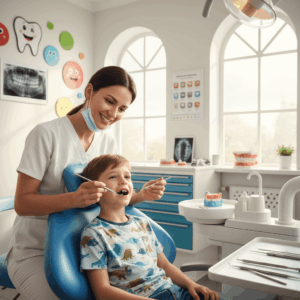
Management of teeth-related nightmares in children involves addressing both the physical and psychological factors contributing to the condition. Since sleep disturbances such as nightmares can be influenced by oral health issues like bruxism, pediatric dentists and healthcare professionals emphasize the importance of preventive and therapeutic measures to improve children’s overall sleep quality.
For children exhibiting bruxism, treatment primarily focuses on preventing tooth damage and alleviating associated symptoms such as pain and headaches. A common intervention includes fitting the child with a night guard or splint to protect the teeth during sleep. Additionally, improving sleep hygiene and addressing underlying stressors may help reduce the frequency and severity of bruxism, thereby potentially diminishing nightmare occurrences related to oral discomfort.
Behavioral factors also play a crucial role in management. For instance, children who demonstrate dental fear or uncooperative behavior during dental visits are more likely to experience distress that can exacerbate oral and sleep problems. Dentists can employ various behavior modification techniques to alleviate fear by explaining procedures clearly and gradually introducing instruments, which helps in reducing anxiety and improving cooperation over time. Reassurance from caregivers following distressing nightmares is equally important, as it helps to soothe the child and reduce anxiety that may perpetuate sleep disturbances.
Education is a fundamental aspect of treatment and prevention. Introducing oral health education early in life reassures children and parents about the importance of maintaining healthy teeth rather than focusing solely on appearance. This proactive approach supports better oral hygiene and reduces the risk of conditions that may interfere with sleep quality.
Research and Studies
Several studies have explored the prevalence and underlying factors of teeth-related nightmares and associated sleep disturbances in children. A systematic review conducted using major English-language databases, including PubMed, EMBASE, and Web of Science, analyzed observational studies published from 2000 to 2023, focusing on dental fear and anxiety (DFA), assessment tools, study settings, respondents, and children’s dental visit experiences. This comprehensive approach helps provide a clearer understanding of how sleep disorders may affect oral health and vice versa, while addressing limitations found in individual studies.
Research has shown a significant link between sleep bruxism (SB)—the grinding of teeth during sleep—and psychological factors such as anxiety, distress, and personality traits like neuroticism in children. Oliveira et al. found that anxiety and distress are particularly prevalent among patients with bruxism, and Vanderas et al. observed correlations between catecholamine concentrations in urine and SB in children aged 6–8 years. Additionally, children with hyperkinetic disorders tend to have a higher incidence of parasomnias—including somnolence, bedwetting, nightmares, and fear of the dark—which are commonly comorbid with teeth grinding. Parasomnias encompass a range of sleep disturbances such as sleep paralysis, sleepwalking, and sleep-related eating disorders, often accompanied by symptoms like restless legs, agitation, snoring, sleep-talking, dry mouth, and excessive sweating.
Polysomnographic studies have validated clinical research diagnostic criteria for sleep bruxism, supporting the reliability of observed associations between sleep disorders and dental symptoms. Overall, the growing body of evidence underscores the multifactorial nature of teeth-related nightmares in children, involving psychological, physiological, and developmental components that merit further investigation.
Cultural References
Teeth-related nightmares have long captured human fascination and have been subject to various cultural interpretations throughout history. One of the earliest documented attempts to interpret these dreams was made in Ancient Greece by Artemidorus, who meticulously analyzed different parts of the oral cavity, such as molars and incisors, assigning specific symbolic meanings to each. For example, he associated losing teeth in a dream with the payment of debts, highlighting the symbolic connection between dental imagery and financial or personal obligations.
In more recent times, the prevalence of teeth-related fears and nightmares among children has been influenced by modern societal factors. Increased exposure to television and social media portrays idealized images of perfect smiles, which often do not reflect natural dental aesthetics. This exposure can create insecurities in children regarding their own teeth, potentially contributing to the frequency and emotional intensity of teeth-related nightmares. Additionally, the rise of video calls during lockdown periods has led children to see their own facial expressions more frequently, possibly heightening self-awareness and anxiety about dental appearance.
Furthermore, dental fear in children is multifaceted and not solely related to physical pain or invasive procedures. It also encompasses fears associated with separation from parents and encountering unfamiliar environments or people, which can compound the distress experienced in nightmares involving teeth. Despite the cultural ubiquity of such dreams, empirical research on the topic remains limited, leaving much to be explored about the psychological and social factors underlying teeth-related nightmares.
The content is provided by Sierra Knightley, Lifelong Health Tips