Summary
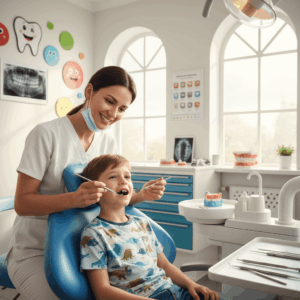
The Revolutionary Supervised Toothbrushing Program is a health initiative aimed at safeguarding children’s teeth from decay. Developed through a collaborative effort between educational institutions and various stakeholders, including the Department of Education, the program primarily focuses on promoting good oral health among children, particularly in early childhood education providers such as primary schools and nurseries. It has been further supported by an £11 million investment from the government and is expected to reach up to 600,000 children in deprived areas across England. The program has been shown to be effective in promoting good oral health habits among children and reducing the incidence of tooth decay.
Implementation of the program has not been without challenges, including funding acquisition, poor communication, logistical issues, and lack of capacity. Despite these hurdles, research is ongoing to improve the program’s uptake and sustainability. One significant advancement in the program includes the integration of artificial intelligence, with tools like the Oral-B GENIUS X toothbrush offering innovative ways to enhance dental hygiene and oral care.
The program’s role in addressing health inequalities is noteworthy, as it targets children in deprived areas, certain age groups, special education schools, and areas with high obesity rates. This approach is in line with recommendations from the National Institute for Health and Care Excellence (NICE) and the NHS Core20PLUS5, which aim to reduce health inequalities for children and young people.
Despite its proven efficacy and cost-effectiveness, the program has been met with criticisms and controversies, primarily related to its implementation. These challenges, combined with the diverse perspectives on the program’s implementation in various countries, suggest that the success of the program relies on adapting to unique local needs and overcoming barriers to its effective implementation.
Development and Implementation of the Program
The supervised toothbrushing program has been a collaborative effort between various stakeholders and educational institutions, initiated in collaboration with the Department of Education. The program’s primary objective is to ensure that providers of early childhood education, including primary schools and nurseries, actively promote good oral health among children. It caters to different age groups and special education schools and addresses obesity rates, with some participants expressing a preference for its universal availability.
However, these programs have encountered various barriers during their implementation, including funding acquisition, poor communication, logistical challenges, and capacity limitations. Researchers from the University of Sheffield, the University of Leeds, and the NIHR Applied Research Collaboration South West Peninsula (PenARC) have created a toolkit to aid the implementation of new toothbrushing programs and overcome these barriers.
The program is not exclusive to the UK; it has been found to be beneficial in other parts of the world. A study conducted by Petersen et al. in 2015 demonstrated the effectiveness of a similar program, which included supervised toothbrushing, oral health education for children, and communication with teachers and parents in improving children’s oral health.
Funding and Sustainability
This initiative is an extension of measures aimed at making government-funded childcare more affordable and accessible. It has been funded with an £11 million investment and is expected to reach up to 600,000 children in deprived areas across England. As part of the commitment to the scheme’s sustainability, the government has secured a partnership with Colgate-Palmolive, which will donate over 23 million toothbrushes and toothpastes to the program over the next five years.
Impact and Effectiveness of the Program
Supervised toothbrushing programs have been proven effective in promoting good oral health in children and are cost-effective, yielding a return on investment (ROI) over five years of £3.06 for every £1 spent. The success of these programs is also evidenced by a significant reduction in tooth decay within just one year, especially among children residing in the most deprived areas. Moreover, these programs help children to develop a toothbrushing habit and provide health education.
However, the successful implementation of these programs does involve various considerations, such as toothbrush type and storage, toothpaste strength and method of dispensing, and the training of staff.
Program’s Role in Addressing Health Inequalities
The Revolutionary Supervised Toothbrushing Program aims to address health inequalities linked to poor oral health. The program targets specific age groups, special education schools, and places with high obesity rates, focusing on deprived areas. Nonetheless, some participants have expressed a preference for a universal offer. The National Institute for Health and Care Excellence (NICE) public health guideline (PH55) recommends these supervised toothbrushing schemes for nurseries and primary schools in areas where children are at high risk of poor oral health.
Reception and Feedback
The acceptance and engagement of children in school-based toothbrushing activities have been identified as critical drivers in the successful implementation and sustainability of these programs. However, the level of parents’ supervision at home and their attendance at educational sessions have been identified as potential limitations. To address these issues, the implementation of toothbrushing policies has been suggested.
Criticism and Controversies
Despite the proven efficacy and cost-effectiveness of Supervised Toothbrushing Programs (STPs), various criticisms and controversies surround their implementation. Numerous barriers to the implementation of these programs have been identified in recent studies. Certain specific factors also influence the targeting of these programs, with some participants expressing a preference for a universal approach. Notably, a study focusing on a pilot school-based toothbrushing program in Taiwan found unique local challenges to implementation.
The content is provided by Avery Redwood, Lifelong Health Tips