Summary
The Key Meeting Between Kennedy and Tribal Leader in Response to HHS Cuts is a significant event that has sparked much interest and discussion. The U.S. Department of Health and Human Services (HHS) announced a substantial workforce reduction, impacting departments that aid older adults, people with disabilities, and the Centers for Medicare & Medicaid Services. This reduction also affected tribal public health boards due to the suspension of federal financial assistance programs by the Office of Management and Budget. In response to these changes, a key meeting was held between U.S. Health and Human Services Secretary Robert F. Kennedy Jr. and tribal leaders, who stressed the importance of consultation and communication in maintaining a successful relationship between the Federal government and tribes.
The meeting saw in-depth discussions on a range of topics, from the impacts of the HHS restructuring plans to the role of tribal sovereignty. Kennedy’s announcement that parts of the Indian Health Service would be exempt from several executive orders signaled an intent to work closely with tribal communities. Despite some controversy and concerns regarding Kennedy’s remarks and the potential negative impacts of the HHS cuts, the meeting served as an important step towards aligning public health policies with the needs of tribal communities.
This interaction marks a significant moment in the ongoing dialogue around tribal sovereignty and the relationships between tribal governments and the Federal government. This meeting underlined the importance of recognizing and respecting the cultural integrity and sovereignty of Indian Tribes. Tribal leaders also emphasized the need for stronger communication and proactive outreach regarding policy or program changes with tribes, further highlighting the importance of consultation.
In response to the proposed changes by the Federal Government, tribal leaders have identified the need for enhanced communication and have suggested measures for the HHS to improve their consultation policy. Despite concerns over the potential negative impacts of federal cuts, this meeting and the subsequent tribal response underscore the critical importance of consultation and communication in maintaining a successful relationship between the Federal government and Indian Country tribes.
Background
In recent developments, the US Department of Health and Human Services (HHS) announced a significant reduction in its workforce, which includes both voluntary departures and layoffs. This reduction has resulted in the decrease of the workforce from approximately 82,000 full-time employees to 62,000, with an additional termination of around 5,200 probationary workers who have been in their positions for less than a year or two. Some of the significant impacts of these cuts were felt at the Administration for Community Living, which supports older adults and people with disabilities, and the Centers for Medicare & Medicaid Services.
Simultaneously, tribal public health boards were greatly affected due to the decision by the Office of Management and Budget (OMB) to put a hold on federal financial assistance programs. These boards play an integral role in public health in tribal communities in a multitude of areas including environmental health, emergency preparedness, health promotion, disease prevention, data gathering and sharing, public health literacy in media, behavioral health and mental health, and workforce needs.
These changes led to an interaction between US Health and Human Services Secretary Robert F. Kennedy Jr. and tribal leaders. The role of these tribal leaders and administrators is crucial in supporting tribal sovereignty and boosting outcomes in essential areas such as Indigenous health, education, and entrepreneurship. The leaders stressed that consultation was a key determinant of a successful relationship between the Federal government and the tribes throughout Indian Country.
The Key Meeting
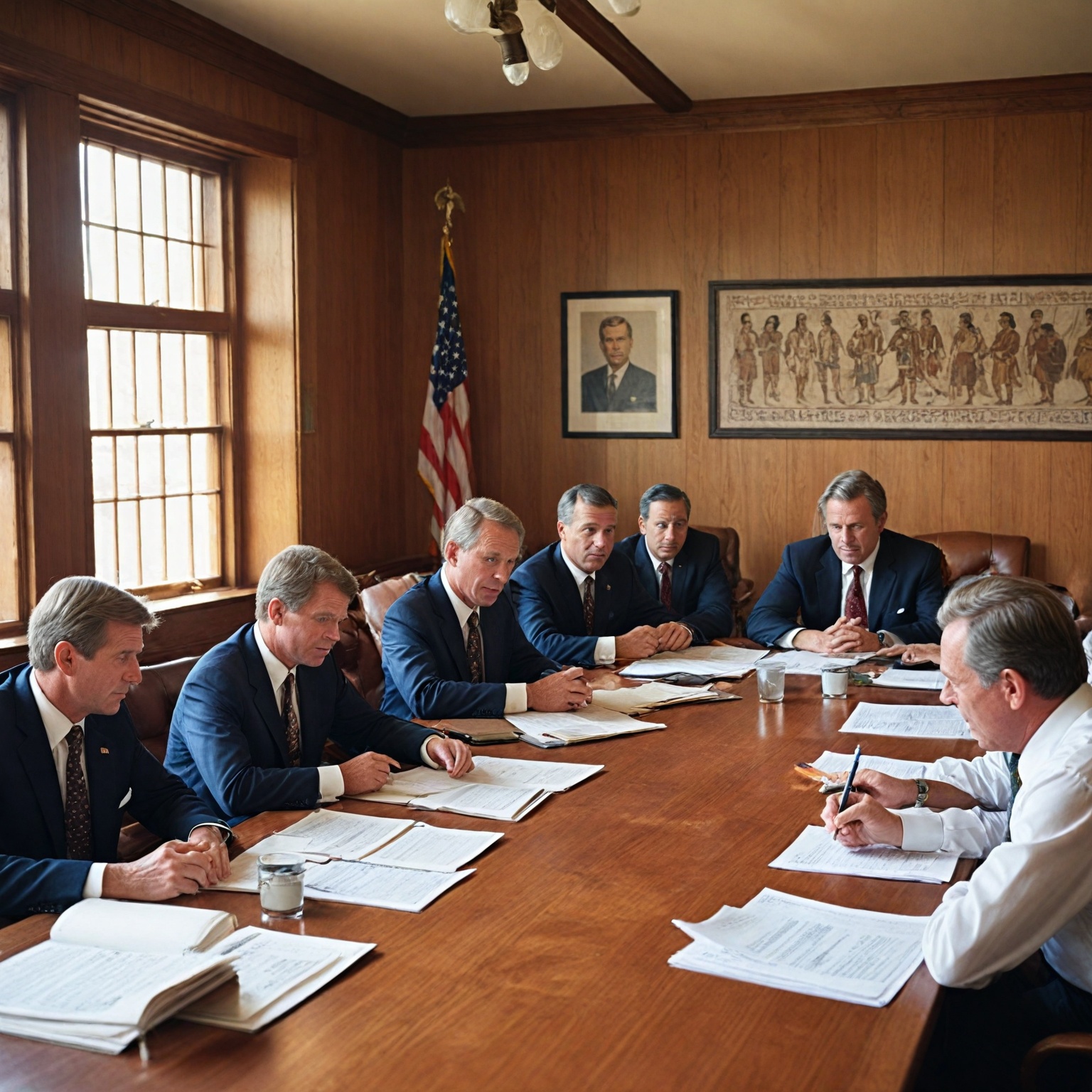
During a tribal self-governance conference, Health Secretary Robert F. Kennedy Jr. sparked both collegial discussions and a slight tension. Kennedy was welcomed onstage with pink and yellow lights swirling through the auditorium, taking care to shake hands with every tribal leader at the table. His opening remark stated that parts of the Indian Health Service would be exempt from several recent executive orders. This meeting represented a key instance of the required consultation between government departments and federally recognized tribal governments before actions that would affect the tribes were taken.
Senators Bill Cassidy (R-Louisiana) and Bernie Sanders (I-Vermont) of the Senate Health, Education, Labor, and Pensions Committee took note of this meeting, announcing an invitation to Kennedy for a hearing about the restructuring of the Department of Health and Human Services (HHS) on April 10.
Kennedy made remarks regarding the future of HHS during the meeting, stating, “The personnel for that current division, of how it exists now, are not being reinstated. The work will continue elsewhere at HHS. We are consolidating duplicate programs into one place”. However, he also mentioned that some programs that were cut are being reinstated, which was news to Erik Svendsen, the director of the division that oversaw the CDC’s Childhood Lead Poisoning Prevention branch. Svendsen had not received any indication the work would be reinstated or continued elsewhere in the CDC. Despite some confusion, tribal leaders who have participated in meetings with IHS officials and other government leadership remained hopeful that Trump Administration officials will listen to their concerns.
Detailed Discussions
The meeting was also seen as a platform to highlight the unique challenges and needs of each Tribe, as captured by the statement: “If you know one Tribe, you know ONE Tribe”. This phrase encapsulated the urgent need for tailored policy decisions based on each tribe’s individual circumstances and requirements. The crucial aspect of tribal sovereignty, the power for tribes to govern their own communities, was acknowledged as an area requiring more understanding and support from public officials. The leaders also discussed the adverse impact of undercounting on tribal access to resources, which could further skew policy decisions.
The restructuring plans of the HHS, including program cuts and consolidations, were discussed extensively. Despite the claim that no essential services or front-line jobs would be impacted, concerns were raised about potential reductions in support for older adults and people with disabilities. The integration of the Administration for Community Living into other HHS agencies and the merging of the ASPE and AHRQ into the Office of Strategy were pointed out as significant changes.
The meeting was also a platform to understand the role of various jurisdictions in the context of tribal governments. The statutes that affirm Tribal sovereignty and clarify the ability of Tribal governments to maintain public safety within their reservations were examined. The conversation culminated in a discussion on public health in tribal communities, touching upon environmental health, emergency preparedness, health promotion, disease prevention, data gathering and sharing, public health literacy in media, behavioral health and mental health, and workforce needs.
Outcome of the Meeting
During the meeting, Kennedy announced that certain parts of the Indian Health Service would be exempt from recent executive orders, thereby demonstrating an intent to work closely with tribal communities. This meeting was held as part of the Make American Healthy Again tour, where Kennedy spoke at the Tribal Self-Governance Conference, an event celebrating 50 years of tribal sovereignty under the Indian Self-Determination and Education Assistance Act.
Despite a measure of controversy involving some of Kennedy’s positions, such as his downplaying of the importance of vaccinations, some of the programs previously cut were reinstated. Among these programs was the lead poisoning prevention and surveillance branch, which aims to eliminate childhood lead poisoning.
The meeting served as an opportunity for Tribal Leaders to comment on HHS’s Tribal Consultation Policy, Regional Consultation Format, Agency Tribal Consultation Policies, and HHS Tribal Advisory Committees. This further highlights the importance of fostering open discussions that respect the government-to-government relationships in place and allows for comprehensive evaluations of the potential impacts of relevant proposals.
However, it was recognized that cuts made by the Department of Government Efficiency still pose threats to tribal health, particularly considering the reliance of many tribal public health boards on federal financial assistance programs. This situation underscores the difficult task faced by tribes in providing care to populations that experience severe health disparities and a high incidence of chronic illness.
In response to these challenges, Kennedy committed to reinstating personnel in the Department of Health and Human Services that were previously cut. Furthermore, he announced plans for the new Administration for a Healthy America, which would focus on primary care, maternal and child health, mental health, environmental health, HIV/AIDS and workforce development.
While many concerns remain, the meeting served as an important step towards ensuring that public health policies better align with the interests and needs of tribal communities.
Criticisms and Controversies
Kennedy’s appearance at the tribal self-governance conference was met with both collegial discussions and a bit of friction. In response to a question about a branch at the Centers for Disease Control and Prevention that monitors lead exposure levels among children, Kennedy expressed his concerns over the high rates of obesity among Native groups. He emphasized the importance of changing food systems to combat public health crises in tribal reservations.
A major controversy that arose from the meeting revolved around the implications of the Supreme Court’s ruling on Tribal Sovereignty in the Oklahoma v. Castro-Huerta case. The jurisdictional framework between Indian Tribes, the federal government, and states has long been complex, especially when it pertains to criminal jurisdiction.
Further complicating matters, Kennedy’s comments on the health of tribal communities coincide with reports of potential undercounting in health resource allocation, which can have a detrimental impact on policy decisions and access to critical resources for tribes. The disconnect between Tribal best interests and public policy was highlighted by regional administrator Kristie Brooks, who emphasized the need for more formal, two-way conversations between tribal representatives and federal agencies, known as Tribal consultations.
In the wider healthcare community, the Health and Human Services (HHS) cuts have been criticized for their potential impact on the US health system. Stella Dantas, president of the American College of Obstetricians and Gynecologists, described the cuts as “alarming” and warned of “reverberating damage” to the US health system now and in the future.
This discussion is framed within the context of a new report by the National Academies of Sciences, Engineering, and Medicine, which investigates how past and current federal policies create, maintain, and/or amplify racial, ethnic, and tribal health inequities. The report suggests 13 policy recommendations to further racial, ethnic, and tribal health equity, and also highlights how the inequitable impact of negative social determinants of health perpetuates racial, ethnic, and tribal health disparities.
Legacy and Historical Significance
The meeting between Kennedy and tribal leaders marked a significant moment in the ongoing dialogue around tribal sovereignty and the relationships between tribal governments and the Federal government. At the core of the discussion was the understanding that traditions, languages, and practices are not merely remnants of the past, but integral to the health and resilience of tribal communities.
The meeting, part of Kennedy’s Make American Healthy Again tour, took place at the Tribal Self-Governance Conference, an event that celebrated 50 years of tribal sovereignty under the Indian Self-Determination and Education Assistance Act. It served as a reminder of the unique government-to-government relationship between the tribes and the federal government.
These challenges highlighted the often-overlooked reality that undercounting may result in reduced access to critical resources and could significantly impact a variety of policy decisions. This further underscores the importance of such consultations and the need for stronger relationships and desirable policies, which are deeply rooted in the understanding that “If you know one Tribe, you know ONE Tribe”. The meeting between Kennedy and tribal leaders was not merely a political interaction, but a moment of historical significance that underscored the value of understanding, respecting, and preserving the cultural integrity and sovereignty of Indian Tribes.
Tribal Response and Strategy
In response to the Federal Government’s proposed changes, tribal leaders underscored the importance of consultation as a critical determinant of the relationship between the Federal government and Indian Country tribes. They identified the need for enhanced communication and proactive outreach concerning policy or program changes as essential. To this end, leaders suggested various measures for the health and human services department (HHS), such as refining the HHS’s Tribal Consultation Policy and improving Regional Consultation Formats.
On May 26, 2010, a memo was issued by Paul Dioguardi to tribal leaders, soliciting nominations for a workgroup within HHS. This workgroup was intended to evaluate and update the HHS Tribal Consultation Policy. All tribes were then sent a letter on July 12, 2010, asking for delegate and alternate nominations to be a part of this workgroup. By July 28-29, 2010, the first meeting of the workgroup had taken place, signalling a move toward more robust tribal involvement in the policy-making process.
There is an acknowledgment that tribal leaders and administrators play a critical role in promoting tribal sovereignty and improving outcomes in areas such as health, education, and entrepreneurship. As such, there is a growing push for programs like the Master of Tribal Administration and Governance (MTAG) offered by the University of Minnesota, designed to equip tribal members for these significant roles.
However, tribal leaders have expressed concern about the impact of federal cuts on schools, housing funds, and Bureau of Indian Affairs (BIA) programs. They warn that efforts to trim national programs like Medicaid and the Department of Veterans Affairs may disproportionately affect tribal communities.
The content is provided by Harper Eastwood, Lifelong Health Tips