Summary
“Delve into the Sweet Science: A Researcher Investigates Maple Syrup and Champions Its Benefits” is a comprehensive examination of maple syrup, its production, history, and various aspects of its contribution to gastronomy and the economy. This includes a thorough look at the influence of environmental factors on maple syrup’s flavor profile and its widespread use as a sweetener in North American culinary practices. Research initiatives, such as those housed in databases like Mapleresearch.org, strive to expand knowledge on maple syrup, spotlighting its economic and cultural significance, while also acknowledging potential issues linked to its use.
The author, in collaboration with the University of Vermont and AgNIC, provides detailed insights on the maple syrup industry, incorporating historical accounts, scientific information, and the impact of climate change on the industry. The different stages of maple syrup production are explored, from sap extraction to syrup classification, alongside a discussion on how climate change could affect these processes. Additionally, the author emphasizes the benefits of maple syrup, presenting it as a valuable contributor to the U.S. economy and a source of enjoyment since the time of the Native Americans.
Research housed within Mapleresearch.org, a joint effort between the University of Vermont and AgNIC, provides a multitude of reports and resources on maple syrup. This includes analysis on the quality grading of Québec Maple Syrup and climate-related projections impacting the industry. The research underscores the importance of understanding changes in global crop growing periods and adaptation to future climates.
The author also delves into the environmental impact of maple syrup production, which is largely affected by climate change. Survey data gathered from producers reveals the extent of climate change’s impact on the industry, and the need for climate adaptation practices to counteract these effects. The author examines how climate change can disrupt traditional production methods, affect maple syrup’s yield and quality, and ultimately alter the future of this cherished industry.
Overview
Maple syrup, a well-known and widely utilized sweetener, has been the focus of numerous research initiatives. The unique and varying flavors of maple syrup are evaluated through a procedure akin to wine tasting, highlighting its gastronomic significance. Not only is the sweetness of maple syrup cherished, but so too is its distinctive flavor profile, which has garnered praise from culinary experts across the globe.
The flavors of maple syrup, however, are influenced by various environmental factors, such as weather and soil type. The syrup, along with its artificial imitations, has found its way into kitchens across North America, most notably as a topping for breakfast staples such as pancakes, waffles, and French toast.
These research initiatives, housed in databases like Mapleresearch.org, aim to gather and disseminate knowledge on the subject, contributing to a broader understanding of the product. These databases provide a multitude of resources related to maple syrup for educational purposes. As with any product, it is important to consider potential issues associated with the use of maple syrup and its derivatives.
Author
The author of this page has compiled information from a diverse range of sources to present a comprehensive understanding of the sweet science of maple syrup. In partnership with the University of Vermont and AgNIC, a maple research guide has been referenced for credible scientific information. The author has also utilized historical accounts detailing the discovery and documentation of maple sugaring in North America. The first written documentation was reported in 1557 by French explorer André Thévet, followed by an observation of North American maple trees by Jacques Cartier in 1540.
The impact of climate change on the maple syrup industry is also an important aspect covered by the author. This is backed by data from the US EPA, which shows the change in biomass for marine species, an indicator of climate change, in the northeastern United States from 1968 to 2015.
Further, the author takes into account the process of maple syrup production, explaining how the different colour classes of syrup are produced during different times of the season. The author also highlights how resources provided by ACERnet can aid in maintaining and growing syrup production in the face of changing climate conditions.
Throughout the page, the author champions the benefits of maple syrup, presenting it as a valuable contributor to the U.S. economy and a delightful flavor enjoyed since the time of the Native Americans.
Publication
Mapleresearch.org, a joint effort between the University of Vermont and AgNIC, provides a vast collection of research reports and resources centered around maple syrup. The organization is committed to disseminating information purely for educational purposes and bears no responsibility for any issues arising from the application of the mentioned products or services.
In an effort to ensure quality experiences, the website uses technologies like cookies to store and access device information, thereby enabling us to process data such as browsing behavior or unique IDs on the site.
The research within the organization not only focuses on the quality grading of Québec Maple Syrup but also includes climate-related projections. A significant finding is that the sap season will start a month earlier by the end of the century compared to its historical pattern. This shift, as indicated by collected data and climate modeling, is not expected to significantly affect maple syrup production.
However, the research highlights the lack of sufficient information for climate impact assessments, particularly on management aspects such as sowing and harvest dates, cultivar choice, and the timing of phenological phases. The research emphasizes the need for understanding changes in global crop growing periods and the consequent adaptation to future climates.
Furthermore, the research explores the origins of maple syrup, revealing it to be a purely North American product derived from indigenous types of maple and other trees such as the willow, yet produced using European techniques. The sweetness in the sap, the essence of maple syrup, is related to the specific conditions of the weather, highlighting the connection between this unique product and its natural environment.
Research Methodology
The research methodology implemented in studying the impact of climate change on maple syrup production utilized surveys as a primary tool for data collection. The survey was aimed at gauging the observations, perceptions, knowledge, and adaptation strategies of maple syrup producers in light of climate change. The demographic of the surveyed group included producers of various ages, which enabled a diverse perspective and a more holistic overview of the situation.
A major component of the research was dedicated to understanding the producers’ attitudes towards the future of the maple syrup system in the context of climate change. In doing so, the researchers hoped to understand the potential for climate adaptation amongst the producers and find possible solutions to bolster the resilience of the maple system.
In addition to the surveys, the study utilized data collected from 18 Vermont maple operations that were practicing high-yield sap collection methods. The growth rates of the trees subjected to these high-yield methods were meticulously measured to evaluate the availability of functional wood in the tapping zone over time. This information aided the researchers in affirming the sustainability of the current tapping guidelines.
History of Maple Syrup Production
Maple syrup production can trace its origins back to the Indigenous peoples living in northeastern North America. These local populations were the first known to have produced maple syrup and maple sugar, with the process of tapping the trunks of certain types of maple trees for sap being practiced long before European settlers arrived in the region. Despite there being no authenticated accounts of how maple syrup production and consumption began, there are various legends that exist, one of the most popular involves maple sap being used in place of water to cook venison served to a chief.
European colonists in the early stages of North American settlement learned the process of sap collection and syrup production from these Indigenous peoples. By 1680, European settlers and fur traders were participating in the harvesting of maple products. Over time, these European settlers adopted and gradually modified these traditional practices. By the 1700s, iron and copper kettles were being used to produce syrup and sugar.
In the province of Quebec in eastern Canada, maple syrup production has been a significant part of the region’s industry and culture, producing over 80% of the world’s supply. Québec is credited with pioneering many developments in the industry, from its initial establishment to the implementation of modern technologies to optimize yield and quality.
The process of maple syrup production remained largely the same until the energy crisis of the 1970s forced maple syrup producers to modernize their labor-intensive methods. During this period, tubing systems were developed and perfected, allowing sap to be transported directly from the tree to the sugarhouse, thereby revolutionizing the process.
Present-day producers must also contend with the impacts of climate change on their production systems. While producers can reduce climate effects through various adaptation practices, knowledge of the changing climate and its impacts on their systems is crucial. This includes understanding how these changes can impact both the yield and quality of forest and agricultural products.
Nutritional and Health Aspects of Maple Syrup
Maple Syrup, particularly 100% pure Maple Syrup from Québec, is known to contribute to the maintenance of good health, providing several essential nutrients. A 60 ml (1/4 cup) serving of Maple Syrup contains 72% of the daily nutritional requirement of manganese, 27% of riboflavin, 17% of copper, and 6% of calcium and potassium.
However, it is important to note that, calorie for calorie, maple syrup is a poor source of nutrients when compared to whole foods like vegetables, fruits, and unprocessed animal foods. Replacing refined sugar with pure, quality maple syrup is likely to yield a net health benefit, but adding it to one’s diet without other dietary changes could have negative effects.
Zinc, a beneficial nutrient for heart health and an antioxidant, is also present in maple syrup. It plays a crucial role in cellular growth and regeneration, with a 1/4 cup serving of maple syrup providing 41% of the daily requirement of zinc. In addition to this, it has been suggested that the health benefits of maple syrup might include promoting a healthier heart due to its zinc content.
Maple syrup may also contain various other minerals such as calcium, iron, magnesium, phosphorus, sodium, potassium, and zinc along with vitamins like thiamin, riboflavin, niacin, and B6.
In terms of digestive health, maple syrup can be a beneficial alternative to refined sugars, helping to keep the digestive tract healthier. It contains zinc and manganese in fairly high amounts, in addition to potassium and calcium. Zinc can help fight illness and improve immunity by keeping white blood cell levels up, while manganese plays a crucial role in fat and carbohydrate metabolism, calcium absorption, blood sugar regulation, brain and nerve function.
Production Process of Maple Syrup
Maple syrup is a unique natural product with a complex production process that has evolved over centuries. The process begins with tapping maple trees by drilling holes into their trunks. The sap that oozes out is collected in a container. This practice of tapping maple trees was first initiated by the Indigenous peoples of Northeastern North America, and was later adopted by European settlers, who gradually refined the production methods.
In the subsequent steps, the sap undergoes a heating process to evaporate most of the water, leaving behind the concentrated syrup. Technological advancements in the 1970s further refined this process. It is noteworthy that to make one part of maple syrup, forty parts of maple sap are required. Due to the large amount of steam produced during the boiling process, it is usually not recommended to perform this process indoors.
Maple syrup production is not just a traditional practice, but also a significant contributor to the Northern Forest economy, providing income and employment opportunities. The long-term sustainability of maple syrup production is dependent on the careful balance of annual sap extraction. It should not damage more wood than can be replaced by the annual tree growth, nor should it extract excessive sugar resources, which could hinder the replenishment of functional wood. To meet these requirements, maple syrup producers traditionally adhere to specific “tapping guidelines”.
Environmental and Ecosystem Impact
Maple syrup production has a strong tie with the environment and the ecosystem where it is produced. This industry, which was estimated to be worth $125 million in the U.S. alone in 2015, is predominantly centered in the northeastern part of North America. However, it can be undertaken in any region with suitable weather conditions and the presence of the right species of maple trees, including areas such as New Zealand.
The production of maple syrup is particularly susceptible to climatic changes due to the weather-dependent nature of the tapping season. These vulnerabilities include warming temperatures, alterations in precipitation, and changes in freeze and thaw cycles, all of which can significantly impact maple trees and, subsequently, syrup production.
An overwhelming majority of producers, approximately 89%, have reported experiencing the negative impacts of climate change on maple syrup production. Despite the potential to mitigate these impacts through climate adaptation practices, such practices necessitate a comprehensive understanding of the changing climate and its effects on the ecosystem, including its impacts on the yields and quality of forest and agricultural products.
Moreover, the issue is not just limited to maple syrup production. Broader environmental issues, such as carbon dioxide absorption leading to ocean acidification, can indirectly affect the industry. Ocean acidification can result in a decrease in the size and abundance of shellfish, which could potentially alter consumer prices. These interconnected environmental impacts underline the complex relationship between maple syrup production and the overall ecosystem.
Looking to the future, there is a mixed sense of concern and hope among producers. While 40% of respondents have expressed worry about the future of the maple syrup industry, a similar number, 39%, remain optimistic, albeit with significant differences observed based on the age of the producers surveyed.
Reception
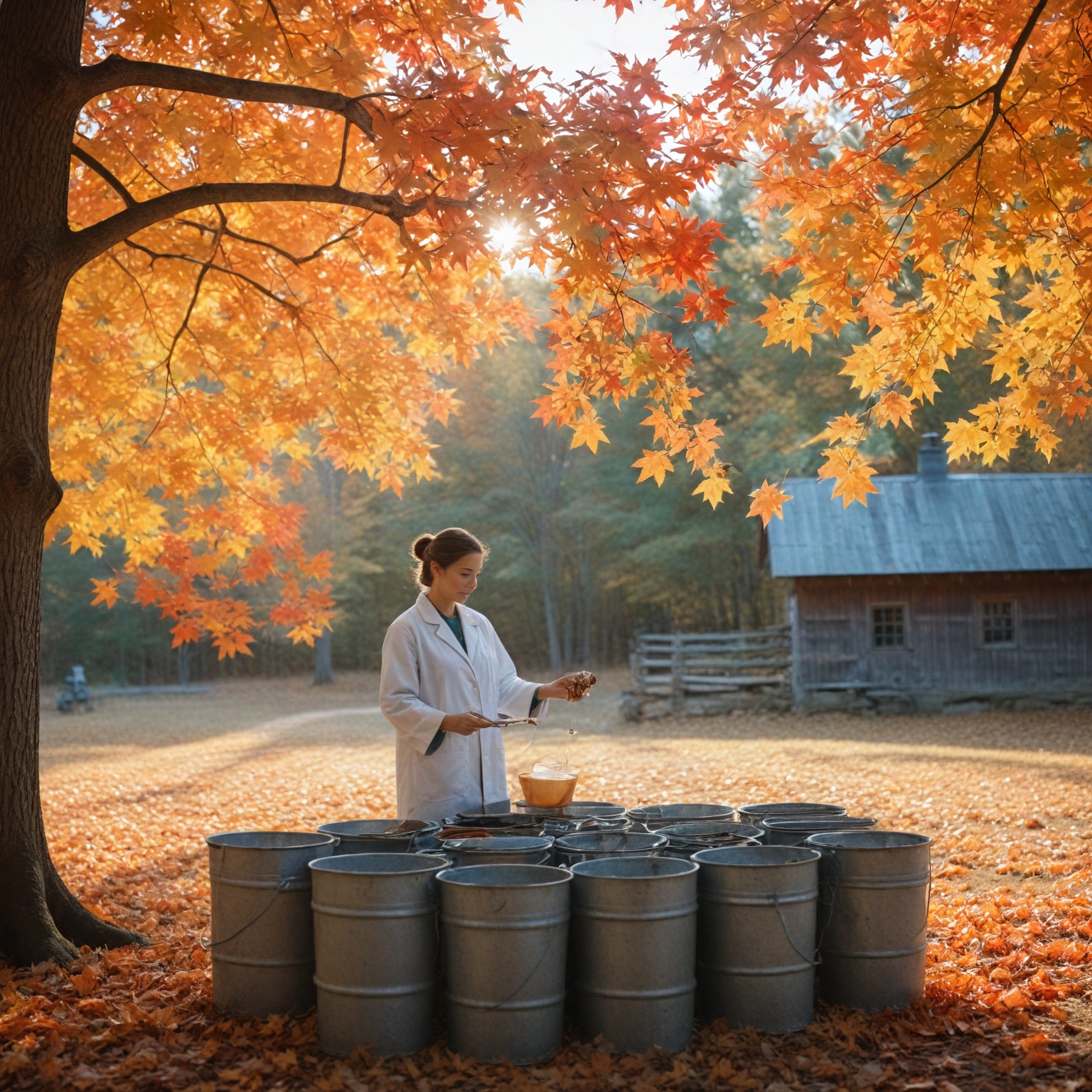
Maple syrup is universally cherished by food enthusiasts, especially those with a fondness for breakfast foods such as pancakes, waffles, and French toast. Its unique flavor, shaped by various environmental factors such as weather and soil type, is comparable to that of wine, inviting a similar tasting procedure to appreciate its nuances. The traditional production process of maple syrup, particularly in Vermont, is considered a seasonal spectacle. During the syrup season, the sight of steam rising from the cupola of sugarhouses signifies that the sap is being boiled down into syrup, an event that can be either quaintly antique or decidedly modern depending on the facility.
In a bid to make the process more accessible to younger generations, initiatives like the Youth Activity Program ‘Game ON!’ in Renfrew County have developed maple syrup making kits, encouraging families to experience this cherished tradition at home.
Furthermore, the grading of maple syrup, such as the process followed in Québec, ensures quality control, enhancing the overall culinary experience for consumers. However, the effects of climate change on maple syrup production have become a concern for producers and researchers. Rising temperatures alter the timing and duration of sap flow in maple trees, which could potentially disrupt traditional methods of production.
To address these issues, research efforts such as the partnership between the University of Vermont and AgNIC have been undertaken. More comprehensive studies are being conducted by international networks like ACERnet, dedicated to understanding the relationship between sap quality, climate, and the ecology of maple trees. These efforts aim to find solutions to strengthen the resilience of the maple system in the face of climate change.
Impact on Maple Syrup Industry
Maple syrup, a traditional commodity with its roots in North American indigenous cultures, has seen significant changes over the centuries. Today, over 80% of the global supply is produced in the province of Quebec, Canada. However, the industry is facing a series of challenges and innovations which are simultaneously shaping its future.
The production of maple syrup involves drilling a hole into a maple tree to allow sap to pour into a container. This age-old practice is considered a key element of the traditional working landscape of the Northern Forest and contributes to job creation and income generation. However, the
The content is provided by Sierra Knightley, Lifelong Health Tips