Summary
“Overcoming the Effects of Microgravity: Astronauts’ Return to Earth & Rejuvenation” refers to the significant impacts of microgravity on astronauts’ health, especially on their neurovestibular and musculature systems, and the resulting changes in force coordination. Studies suggest that microgravity exposure causes disorientation, decreased neuromuscular coordination, and changes in cardiovascular physiology among astronauts. Astronauts often face difficulty in standing, stabilizing their gaze, walking, and turning upon their return to Earth.
Microgravity also adversely affects the muscular system of astronauts, leading to muscle atrophy. It influences the way forces are coordinated, particularly when gripping objects, indicating that our brain anticipates Earth’s gravity effects even in its absence. These effects significantly impact astronauts’ physical and mental health, making their return to Earth challenging.
Understanding and overcoming the effects of microgravity are essential to ensure the success and safety of space missions. This has resulted in extensive research and the development of countermeasures such as exercise devices, nutritional supplements, and pharmacological interventions. Additionally, post-flight rehabilitation programs focus on restoring astronauts’ health through structured physical exercises, intensive physical therapy, and rigorous nutritional monitoring.
As space missions continue to increase in duration and frequency, this field’s future research and development are expected to focus on novel countermeasures and mitigation strategies to effectively combat the effects of microgravity on human health.
Understanding Microgravity
Microgravity significantly impacts the health of astronauts, particularly affecting the neurovestibular and musculature systems, and altering the way forces are coordinated when gripping objects.
Impact on the Neurovestibular System
Microgravity affects the neurovestibular system, an integrated set of neural sensory, motor, and brain circuits that enables humans to maintain balance, stabilize vision, and understand body orientation in terms of location and direction. When exposed to microgravity during space missions, astronauts often experience disorientation and decreased neuromuscular coordination upon return. Issues such as difficulty standing up, stabilizing their gaze, walking, and turning are common post-mission symptoms.
Moreover, microgravity causes a redistribution of body fluids away from the extremities, leading to facial puffiness during flight and alterations in cardiovascular physiology. This can result in impaired orthostatic responses upon returning to Earth, where astronauts’ blood pressure may drop abnormally low when they move from lying down to a sitting or standing position.
Impact on Musculature System
In a microgravity environment, muscles undergo atrophy, characterized by a decrease in muscle mass and volume due to the reduced mechanical load normally exerted by Earth’s gravity. This results in decreased muscle strength and endurance.
Changes in Force Coordination
Research indicates that short-term exposure to microgravity induces subtle changes in how forces are coordinated, particularly when gripping objects. In the absence of Earth’s gravity, the brain still anticipates its effects, leading to altered force coordination. Understanding these long-term effects observed on the Space Station helps identify potential hazards for astronauts moving between different gravitational environments. It also aids in improving the design of haptic interfaces used during deep space missions to the Moon and Mars.
Physical Effects of Microgravity on Astronauts
Long-term exposure to microgravity, as encountered during space missions, has significant implications for astronauts’ health and well-being. The microgravity environment of space affects the functioning of every cell in an astronaut’s body, leading to several physiological changes.
Skeletal System
The lack of mechanical load also adversely affects the skeletal system, leading to the loss of bone mass. Bone cells alter their behavior in microgravity, with cells responsible for bone creation slowing down and those breaking down old or damaged tissue maintaining their usual pace. This imbalance results in bone breakdown outpacing growth, leading to weaker and more brittle bones. Studies in mice showed an increase in osteoclasts (cells that break down bone tissue) and a decrease in osteoblasts (cells that form new bone) and growth factors in response to microgravity exposure. These changes lead to higher blood calcium levels, potential kidney stone formation, and uncertainty about the complete recovery of bone density.
Cardiovascular System
Additionally, the reduced blood volume and plasma volume can lead to anemia. Astronauts returning to Earth can experience an increased heart rate, decreased blood pressure, and even fainting.
Although a direct link between microgravity and cardiovascular disease remains elusive, documented physiological changes, such as decreased orthostatic tolerance and increased arrhythmias, pose potential threats to astronauts’ health. In space, the heart, like any muscle, does not have to work as hard in microgravity. This could lead to a decrease in the size of the heart over time. Upon returning to Earth’s gravitational pull, a smaller and weaker heart might overextend itself.
Psychological Effects of Microgravity
The psychological impact of microgravity is a topic of growing concern as the duration of space missions increase. Exposure to microgravity causes a multitude of psychological and psychiatric issues among astronauts, which are linked to a multitude of variables.
Significant attention has been given to the selection and preparation of astronauts to manage the mental strain caused by space travel. This includes specific psychological and psychiatric support. Despite this, the transition back to life on Earth after a space mission can be just as challenging. The recovery from these symptoms depends on the duration of exposure to stress factors related to the space environment. The longer the exposure, the more pronounced the effects, with some only manifesting after weeks to months.
The psychological impact of space travel is such that it’s been suggested that future research should focus on finding effective countermeasures to prevent mental health problems among space travelers. This could include both pharmacological and non-pharmacological interventions. Understanding the psychological effects of microgravity is crucial for the success and safety of future space missions, and it is an area that requires ongoing research and attention from the scientific community.
Counteracting Microgravity Effects
Exposure to microgravity induces changes in how forces used in gripping objects are coordinated, highlighting the anticipation our brains have for the effects of Earth’s gravity. This research propels the development of new technologies and procedures to counteract the negative effects of microgravity, which includes exercise devices, nutritional supplements, and pharmacological interventions.
Exercise Regimens
Exercise is effective at minimizing large muscle atrophy. Astronauts use equipment such as a cycle ergometer and treadmill with downward applied pressure to maintain fitness. Exercise countermeasures are employed during spaceflight to combat the negative physiological effects of long-duration microgravity exposure. Weight-bearing exercises, which force astronauts to work against gravity, and resistance exercises are used to strengthen muscles and bones. Early exercise regimens included running on a treadmill at low velocity and conducting resistance exercise at low loads for long periods of time. With advancements in exercise hardware like the Advanced Resistive Exercise Device (ARED) weight-lifting system, treadmill T2, and the Cycle Ergometer with Vibration Isolation and Stabilization System (CEVIS) cycling machine, astronauts are now able to maintain fitness more effectively.
Nutritional Interventions
During long-duration missions, astronauts rely on nutritional supplies carried from Earth. A Nutritional Status Assessment Supplemental Medical Objective (Nutrition SMO) ensures astronauts’ nutritional needs are met by collecting and analyzing blood and urine samples. Research on food forms and allocation strategies for deep-space missions contributes to the formulation and processing of functional foods for consumption by astronauts in outer space.
Pharmacological Countermeasures
Pharmacological interventions such as drugs used to prevent bone loss on Earth, like myostatin inhibitors, may successfully prevent bone and muscle loss in both astronauts and animal models in space. Some experiments like the Vertebral Strength capture detailed scans of astronauts’ bones and muscles supporting the vertebral column before and after flight, providing researchers with information about overall musculoskeletal strength. This evidence shows promise in developing drugs to treat bone loss, which could be beneficial for both astronauts and people on Earth.
While astronauts experience significant physiological changes due to exposure to microgravity, the human body is remarkably resilient and adaptable. Scientists continue to research and refine strategies to mitigate these effects and ensure astronauts’ safety and performance during and after long-duration missions.
Post-Flight Rehabilitation
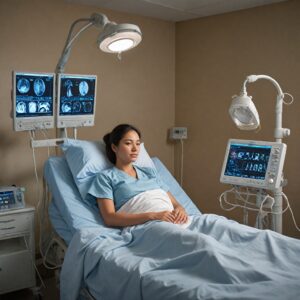
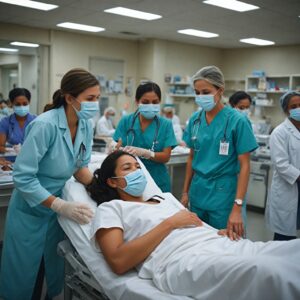
Post-flight rehabilitation is a critical process designed to restore astronauts’ health after returning from space missions. This program targets the musculoskeletal system, which is significantly impacted due to exposure to microgravity conditions in space. The rehabilitation regime primarily includes structured physical exercises, intensive physical therapy, and rigorous nutritional monitoring.
Rehabilitation Strategies
The strategies involved in post-flight rehabilitation are comprehensive and carefully structured. Astronauts perform weight-bearing exercises, resistance training, and other exercises to work against gravity, thereby strengthening their muscles and bones. For instance, a program called the Integrated Resistance and Aerobic Training Study (Sprint) showed that high-intensity, low-volume exercises were effective in maintaining fitness in a microgravity environment despite astronauts spending up to 10 hours per week exercising. Additionally, astronauts participate in specific extravehicular activities only after their bodily fluid redistribution stabilizes, allowing them to acclimatize to space.
Nutritional Monitoring
Nutrition plays an essential role in the rehabilitation process. To ensure the astronauts’ nutritional needs are met, a Nutritional Status Assessment Supplemental Medical Objective (Nutrition SMO) is conducted. This assessment includes tests and analyses of blood and urine samples from the astronauts, looking for indications of bone health, muscle loss, hormonal imbalances, gastrointestinal functions, cardiovascular health, iron metabolism, ophthalmic changes, and immune changes that occur during space flight under conditions of microgravity or weightlessness.
With the advent of human spaceflight programs, the lessons learned from these rehabilitation programs can be beneficial in formulating post-flight rehabilitation protocols for future astronauts.
Astronauts’ Mental Rejuvenation after Return
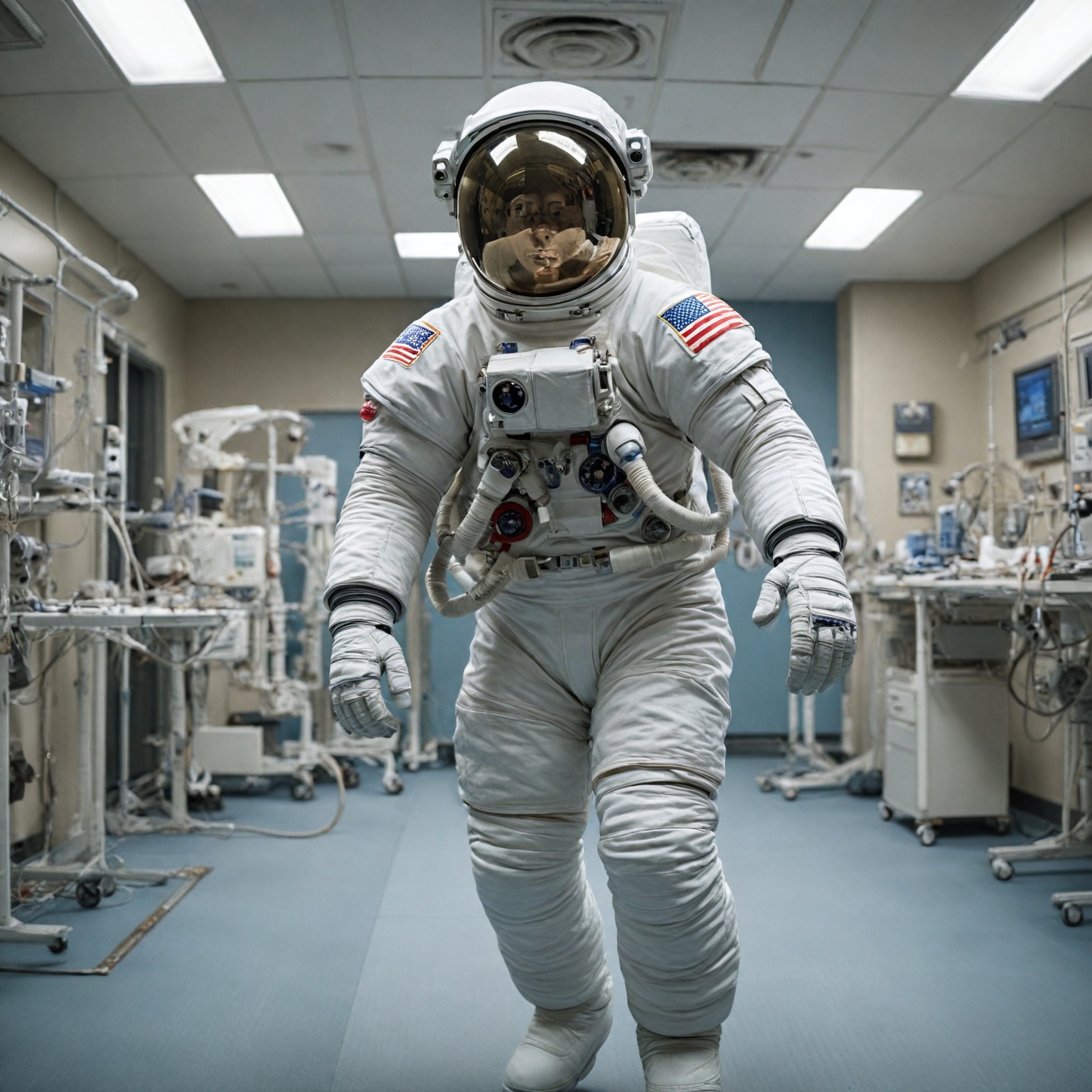
Returning from space missions is not only physically but also mentally challenging for astronauts. Once back on Earth, astronauts have to readjust to the planet’s gravity, which can lead to difficulties in standing, stabilizing their gaze, walking, and turning. To ensure their safety, astronauts are often seated immediately upon their return.
The challenges faced by astronauts are not only limited to the physical effects of readjusting to Earth’s gravity. Mental health is a crucial aspect of concern during the reintegration process. Anecdotal evidence, scientific research, and reports have underscored the significant impact space travel can have on the mental well-being of astronauts, leading to substantial efforts in their selection, preparation, and the design of the space missions they undertake.
Certain situations can be hard to manage due to adaptation disturbances, and these can pose a risk to the success of a mission. It becomes crucial to find effective and rapid countermeasures, both pharmacological and otherwise, to these problems. The recovery of astronauts from these symptoms depends on the duration of their exposure to the stress factors related to the space environment.
Training, tools, and strategies are in place to help astronauts maintain their mental health, which can be particularly strained due to the high-stress nature of their jobs. These countermeasures are as vital in space as they are during their readjustment period on Earth.
Case Studies
Several studies and systematic reviews have delved into the challenges faced by astronauts during their return to Earth, mainly focusing on the effects of microgravity on the musculoskeletal system and the importance of post-mission rehabilitation. These studies not only concentrate on humans, but also animals, bringing together the scattered scientific literature on this topic.
One of the notable studies in this regard is the NASA Sprint Study, which was conducted to analyze the results of high-intensity training during spaceflight. This study emphasized the need for robust exercise countermeasures to maintain the multisystem function in astronauts during long-duration spaceflights.
On the other hand, the effects of microgravity on visual acuity have been monitored since the early days of the space program. Even though the impact on the crew was initially considered minor, it became more significant with extended missions to the International Space Station, which increased the duration of time spent in microgravity.
In the context of post-mission rehabilitation, the studies have underscored the role of structured physical exercise, physical therapy, and nutritional monitoring in ensuring optimal recovery. The knowledge gained from these rehabilitation programs would be valuable in developing post-flight rehabilitation protocols, especially in light of India’s upcoming maiden Human Spaceflight mission.
This field continues to advance with the application of advanced techniques like machine learning in estimating risks, which are developed from much larger non-astronaut populations. The use of polygenic risk data and information on individual susceptibilities could be instrumental in guiding personal, primary CVD prevention strategies.
Future Research and Development
Continued research into the effects of microgravity and space radiation on astronauts’ muscle and bone health is of significant interest due to the profound health implications, particularly for long-term space missions. Future studies are projected to focus on changes in the expression of genes involved in muscle and bone metabolism due to microgravity, providing evidence of its significant impact on human health.
Advancements in the field of rehabilitation post-space mission is another key area of research. The development of specially designed rehabilitation programs helps to restore the muscle and bone health of astronauts after returning from a space mission. This includes strategies like physical therapy utilizing advanced technologies such as signal processing and electrical stimulation to expedite the recovery of astronauts’ musculoskeletal health.
These studies also aim to encourage the development of innovative technologies and procedures to counteract the adverse effects of microgravity. This includes the development of novel exercise devices, nutritional supplements, and pharmacological interventions. Research in this field has far-reaching applications, such as the treatment of terrestrial health conditions like osteoporosis and muscle atrophy due to aging.
The ultimate goal of future research and development is to understand and overcome the effects of weightlessness on the human body, not only for the benefit of astronauts in long-duration space missions but also for individuals facing similar health problems on Earth. Understanding the effects of transitioning between different gravitational environments also remains a critical aspect of future research, which will enhance the safety and efficiency of deep space missions to the Moon and Mars.
As astronaut selection, training, and health monitoring continue to improve, the integration of enhanced spacecrafts, in-flight medical care capabilities, countermeasure protocols, and post-flight rehabilitation strategies will be central to minimizing the health risks associated with exposure to microgravity and ensuring the safety of space travel.
The content is provided by Blake Sterling, Lifelong Health Tips