Summary
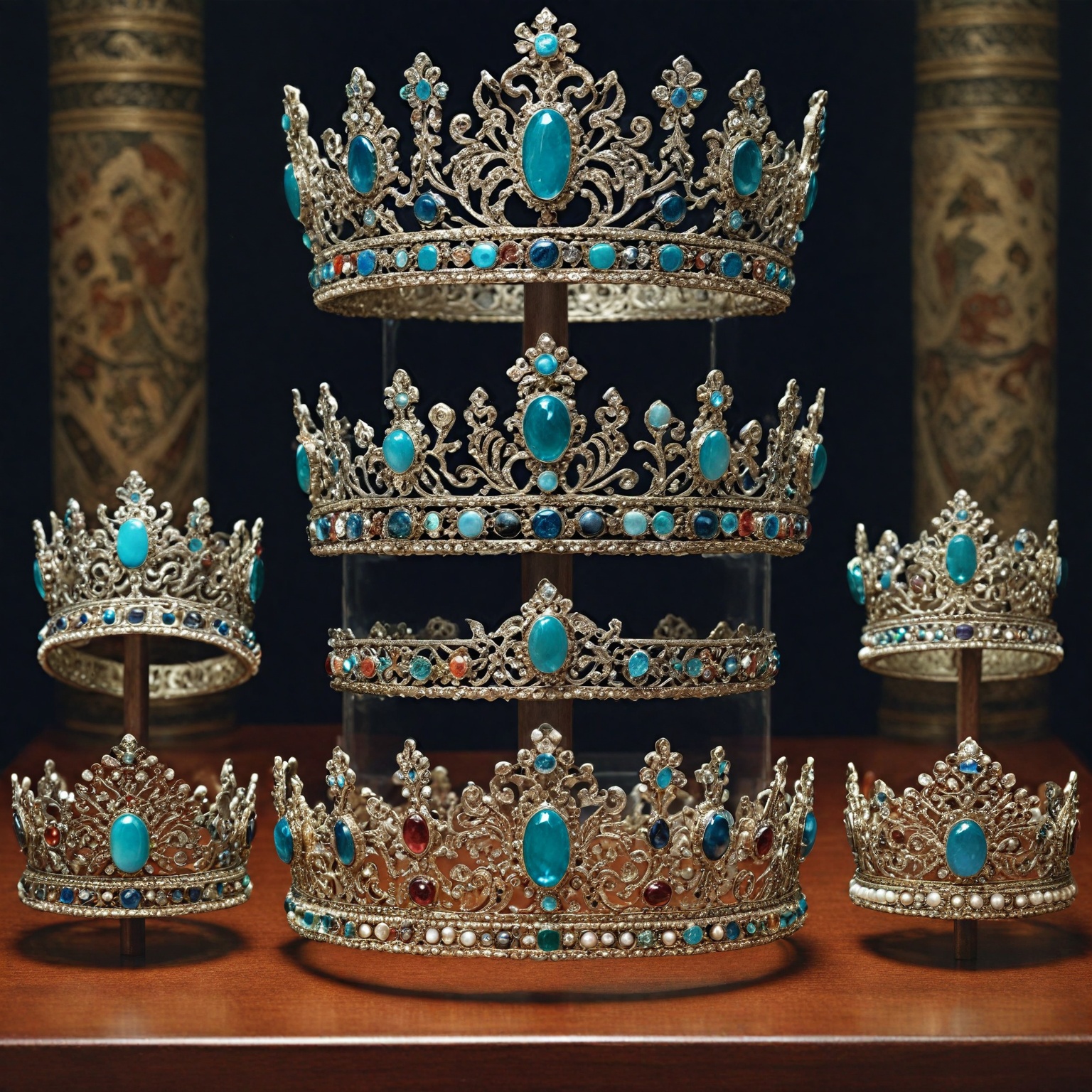
A crown is a traditional head adornment worn primarily by monarchs as a powerful symbol of authority, sovereignty, and legitimacy. Beyond its political role, the crown represents cultural identity, honor, and victory, embodying concepts of glory and immortality across diverse civilizations. As an object of artistic expression, crowns showcase intricate craftsmanship and design, utilizing materials such as gold, precious gemstones, feathers, and enamel to convey the status and heritage of the wearer.
Historically, crowns have evolved from simple natural materials like leaves and flowers to highly elaborate regalia that signify not only rulership but also religious and social authority. Iconic examples include the ancient Egyptian double crown symbolizing the unification of Upper and Lower Egypt around 3100 BCE, medieval European crowns emphasizing divine right and centralized monarchy, and distinctive regional designs such as the Chinese phoenix crown and the Russian Monomakh’s Cap, reflecting local artistic traditions and cultural exchanges. Crowns have also played important roles in religious ceremonies and social rituals, illustrating their broad cultural significance beyond monarchy.
The design and symbolism of crowns vary widely across time and cultures, incorporating motifs that communicate political power, spiritual beliefs, and dynastic claims. Differences between closed and open crowns, the use of specific gemstones, and incorporation of cultural iconography reveal how crowns serve as complex emblems of identity and authority. Additionally, crowns have influenced architectural styles and contemporary artistic interpretations, demonstrating their enduring impact on cultural heritage.
Despite their ancient origins, crowns remain relevant in modern ceremonial contexts and as treasured artifacts preserved in museums worldwide. Their continued display and reinterpretation underscore the crown’s lasting status as a potent symbol that connects past traditions with contemporary expressions of power, artistry, and cultural memory.
Definition and Purpose
A crown is a traditional form of head adornment worn by monarchs, symbolizing their power, dignity, and authority. It often represents the monarchy itself and, by extension, the government or state ruled by the sovereign. Beyond its political significance, the crown serves as a mark of honor or victory and is closely associated with concepts of glory, immortality, royalty, and sovereignty.
The primary purpose of a crown is decorative, intended to express creativity, skill, and beauty across civilizations. Its design carries rich symbolism that varies widely across cultures and historical periods, encompassing not only physical appearance but also the materials, colors, and gemstones used to embellish it. These elements reflect the resources available during different eras and convey cultural identity and heritage.
Throughout history, crowns have been iconic emblems of leadership and legitimacy, signifying rank and distinction for rulers and religious leaders alike. Their enduring appeal lies in their ability to visually communicate power and prestige while honoring tradition and cultural values.
Historical Origins and Evolution
Crowns have been emblematic of power, authority, and sovereignty since prehistoric times. Early crowns were often made from natural materials such as leaves and flowers, symbolizing rank and distinction among ancient peoples. The earliest archaeological evidence of crowns dates back to ancient civilizations including Egypt, Greece, and Rome, where they played significant roles in religious and royal ceremonies.
One of the most iconic developments in the history of crowns was the Egyptian double crown, which emerged around 3100 BCE following the unification of Upper and Lower Egypt. This crown symbolized the pharaoh’s dominion over the entire land and became a powerful emblem of political unity. Similar concepts of crowns as symbols of unification and authority were later adapted by other cultures, including Mesopotamia and Greece, each infusing their own cultural meanings and designs.
In early Russian history, crowns such as those held in the Kremlin of Moscow from the late 13th or early 14th century illustrate the cultural exchange between the Kazans and Russians. These crowns, often crafted from precious metals like gold and silver, reflect both artistic mastery and political significance. Likewise, the browband or diadem, an antecedent to the crown, was worn by Achaemenid Persian emperors and subsequently adopted by Roman emperors, demonstrating the diffusion of regal symbols across empires.
During the medieval period, crowns became increasingly important in the coronation rites of European monarchies, serving as tangible proof of a monarch’s divine right and authority to govern. The rise of centralized monarchies in 15th and 16th century Western Europe marked a transformative period wherein crowns symbolized not just hereditary power but also the consolidation of state control under the new monarchs. This shift was accompanied by changes in governance, military organization, and administrative structures, further enhancing the crown’s role as a political emblem.
The Renaissance era brought about a renewed focus on elaborate and opulent crown designs, reflecting the period’s artistic flourishing and the monarchs’ desire to project grandeur and legitimacy. Intricate details, lavish materials, and symbolic gemstones became characteristic of crowns from this time, emphasizing the importance of visual symbolism in royal authority.
Throughout history, the materials, designs, and symbolism of crowns have varied widely, shaped by local traditions, resources, and evolving political contexts. Despite these differences, crowns have consistently remained powerful icons of cultural identity, heritage, and sovereignty across the world.
Types and Styles of Crowns
Crowns have taken various forms and styles throughout history, reflecting the cultural, religious, and political contexts of their use. Their designs, materials, and symbolic meanings differ widely across civilizations and epochs, underscoring the diversity of regal traditions worldwide.
Ancient Crowns
In ancient Egypt, the unification of Upper and Lower Egypt around 3100 BCE led to the creation of the double crown, symbolizing the pharaoh’s sovereignty over the entire land. This crown combined the white crown of Upper Egypt and the red crown of Lower Egypt, serving as a potent emblem of unity and divine kingship. Similarly, the Achaemenid Persian emperors wore diadems, which influenced Roman imperial headgear. Roman emperors also used the corona radiata—a radiant crown associated with the cult of Sol Invictus—before Christianity became dominant in the empire.
Medieval and European Crowns
During the Middle Ages, European crowns became more elaborate and were often decorated with precious stones and metals, developing unique styles for different monarchies. These crowns symbolized not only authority but also religious sanction, as seen in coronation ceremonies where ecclesiastical officials would place the crown upon a monarch’s head. The heraldic symbol of the Three Crowns, representing the three evangelical Magi, became emblematic of the Swedish kingdom and the Kalmar Union that united Denmark, Sweden, and Norway. Famous European crowns such as the Crown of Saint Edward and the Reichskrone encapsulate both craftsmanship and the traditions of governance.
Asian Crowns and Influences
In India, crowns known as makuta (Sanskrit for “crest”) have been used since ancient times, adorning Hindu gods and kings. The makuta style influenced Indianized kingdoms in Southeast Asia, including Java, Bali, Cambodia, Burma, and Thailand, reflecting the spread of Hindu-Buddhist concepts of kingship. Traditional Thai dancers wear crowns called mongkut, inspired by royal and divine headgear. The phoenix crown of China stands out as a masterpiece of artistic expression, combining intricate crafts and symbolic aesthetics that reflect traditional Chinese cultural values and identity.
Crowns in Other Cultures
In the Pre-Columbian Americas, crowns were often decorated with rare feathers, such as the quetzal, symbolizing prestige and spiritual authority. Similarly, Polynesian crowns, like those in Hawaii, used natural adornments rather than metals or gems. In the pre-Colonial Philippines, elite individuals and deities wore crown-like diadems called putong, crafted from gold and other precious materials.
Religious and Ceremonial Crowns
Crowns have also played significant roles in religious and ceremonial contexts. In Christian traditions, crowns are placed during coronations to signify divine approval of monarchic authority, while nuptial crowns or coronals are used in Eastern Orthodox marriage ceremonies to crown the bride and groom as “king” and “queen” of their household. In Slavic weddings, ornate metal crowns resembling imperial crowns are held above the couple’s heads as part of the ritual. Moreover, crowns can symbolize religious veneration, such as the Black Crown of the Karmapa Lama in Tibetan Buddhism.
Costume and Symbolic Crowns
Beyond formal and sacred uses, crowns also appear in theatrical and ritual contexts, such as costume parties, carnival krewes, and symbolic kingship during festivals. These costume crowns may replicate royal designs but are used primarily for entertainment or ritual purposes.
Materials and Symbolism
The choice of materials in crowns varies according to availability and symbolic importance. Western and Oriental crowns are typically made from gold and precious stones, while some indigenous crowns incorporate feathers and other natural elements. The design, color, and gemstones used in a crown communicate cultural values, religious beliefs, and the wearer’s status, making crowns potent conveyors of identity and authority.
Materials and Craftsmanship
Crowns have historically been crafted from a wide range of materials, each chosen not only for their availability but also for their symbolic significance and visual impact. The choice of materials reflects cultural values, social status, and technological capabilities of the time. In many societies, crowns were made from rare and precious substances to emphasize the power and prestige of the wearer. For example, Western and Oriental crowns traditionally incorporate gold and precious gemstones, which underscore wealth and authority. In contrast, crowns from Native American Pre-Columbian cultures often featured rare bird feathers, such as those of the quetzal, highlighting the sacred and symbolic importance of natural elements. Similarly, Polynesian crowns, including those from Hawaii, also utilized exquisite feathers to convey status and spiritual significance.
Beyond precious metals and feathers, crowns may also include materials such as enamel and leather to add decorative complexity and color. Enamel, in particular, allows for intricate motifs and personalized designs that enhance the visual storytelling embedded in the crown’s craftsmanship. Ancient Korean crowns, for instance, often incorporate feather or wing-like decorations. These elements not only reveal the importance of birds in Silla culture but also connect to spiritual beliefs in shamanism, where wings symbolize flight in the spiritual realm. The stylized “stag-like” pieces on some Korean crown diadems are thought to represent bird feathers, further illustrating the deep integration of symbolism in crown design.
The technical craftsmanship of crowns has evolved over millennia, preserving traditional techniques while integrating new materials and methods. In ancient China, the phoenix crown was a ceremonial headdress worn by imperial consorts and noblewomen, embodying centuries of royal gold and silver filigree artistry. This craftsmanship, recognized as a national intangible cultural heritage, reflects a highly specialized skill set passed down through generations. Modern artisans sometimes reinterpret these traditions using contemporary materials; for example, a craftsman in Hangzhou transformed discarded aluminum cans into a “Forbidden City Phoenix Crown,” blending modern sustainability with ancient artistry.
Famous crowns such as the Imperial State Crown of the United Kingdom epitomize the pinnacle of crown craftsmanship and material richness. This crown contains over 2,800 diamonds, along with sapphires, emeralds, rubies, and historically significant stones like the Black Prince’s ruby and the Cullinan II diamond. It serves not only as a symbol of monarchy but also as a testament to exquisite craftsmanship and the use of the finest materials available.
Design Elements and Symbolism
Crown designs embody a rich tapestry of cultural, historical, and symbolic meanings that reflect the values and traditions of the societies they represent. The physical features of crowns—including their shape, materials, colors, and decorative motifs—are carefully chosen to convey messages of authority, legitimacy, and identity.
One of the most prominent design distinctions is between closed and open crowns. A closed crown typically features a circular base topped with arches, symbolizing the monarch’s supreme authority and control over both church and state. The arches represent the monarch’s power bridging secular and religious realms, while the circular form denotes unity and sovereignty over the kingdom. In contrast, open crowns lack arches and often symbolize a different aspect or level of rulership. The evolution of such designs also reflects changing political and cultural contexts, with practices like grounding arches on surrounding ornaments rather than the circlet rim beginning in the 17th century, adding new layers of royal or imperial significance.
Materials used in crowns are equally significant. Precious metals such as gold and silver and the inclusion of gemstones have historically denoted wealth, divine favor, and permanence. In Western and Oriental crowns, gold and precious stones dominate, while in indigenous cultures, such as Pre-Columbian Native American and Polynesian societies, rare feathers—like those of the quetzal—serve as important decorative elements that symbolize beauty and rarity. Sterling silver crowns in Asian and African traditions are also notable for their intricate craftsmanship and cultural symbolism, often featuring heraldic motifs, animal totems, or stylized initials that convey the ruler’s identity and lineage.
Beyond materials, specific motifs and decorations carry deep cultural meanings. For example, ancient Korean crowns often incorporate feather or wing-like designs, reflecting the spiritual importance of birds and shamanistic beliefs about flight and the afterlife. The Chinese phoenix crown, with its complex craftsmanship and vivid colors, exemplifies an artistic expression deeply tied to national identity and traditional aesthetics. This crown type not only serves a decorative purpose but also acts as a vessel for cultural heritage and craftsmanship, symbolizing both artistic achievement and cultural continuity.
Crown design also conveys political and dynastic symbolism. The heraldic symbol of the Three Crowns in Sweden, representing the three Magi or kings, illustrates how crowns can encapsulate historical unions and personal or dynastic claims, such as the Kalmar Union between Denmark, Sweden, and Norway. Additionally, crowns often incorporate a globe topped with a cross, symbolizing Christian dominion over the world, a motif common in European regalia.
Notable Historical Crowns
Crowns have served as powerful symbols of authority and divine right across various cultures and historical periods. From ancient civilizations to modern monarchies, notable crowns reflect unique traditions, designs, and cultural meanings.
In ancient Egypt, the use of crowns was highly symbolic and regionally distinctive. The White Crown (Hedjet) represented Upper Egypt, while the Red Crown (Deshret) symbolized Lower Egypt. Following the unification of the two lands, the combined Pschent crown emerged as a potent emblem of unified rule. Pharaohs also wore the diadem, linked to solar cults and later revived by Roman emperors, signifying royal authority and divine association. Other ancient crowns such as the Khepresh (blue crown) were also prominent in Pharaonic regalia.
Medieval and Renaissance Europe saw the evolution of more elaborate crowns, adorned with precious metals and gemstones. The British Crown Jewels exemplify this tradition, with iconic pieces like St Edward’s Crown used exclusively during coronations, and the Imperial State Crown worn at major state occasions. These crowns are part of a larger coronation regalia, which also includes the Sovereign’s Sceptre with Cross, the Sovereign’s Orb, and the Coronation Spoon. The Crown Jewels have been safeguarded at the Tower of London since the 1660s, becoming a symbol of continuity and national heritage.
Russia’s Monomakh’s Cap presents a distinctive departure from typical crown designs. Dating back to the 14th century, it is crafted as an eight-sectored golden skullcap lavishly decorated with gold filigree, pearls, rubies, emeralds, and sable trim. Unlike traditional crowns, its hat-like shape reflects cultural interactions between the Russians and the Kazans, illustrating a
Social and Political Roles of Crowns
Crowns have played a pivotal role in social and political contexts throughout history, serving as potent symbols of power, authority, and legitimacy. In many ancient civilizations, such as Egypt, Greece, and Rome, crowns were not only ornamental but also sacred objects that conferred divine right and governance upon rulers. For example, the Egyptian double crown symbolized the unification of Upper and Lower Egypt and the pharaoh’s dominion over the entire land.
During the Middle Ages, European monarchies developed increasingly elaborate crowns, richly adorned with precious stones and metals, to visually assert their sovereignty and political status. The design of these crowns often carried distinct meanings tied to the identity and authority of individual monarchies. Beyond their decorative function, crowns were central to coronation ceremonies, where the act of crowning formally legitimized a monarch’s right to rule. These ceremonies were frequently combined with other rituals such as enthronement and anointing, both reinforcing the monarch’s sacred and political authority.
In addition to royal use, crowns have appeared in various social rituals and cultural traditions worldwide. In Eastern Orthodox Christian weddings, for instance, the bride and groom are crowned during the crowning ceremony, symbolizing their new roles as “king” and “queen” of their household. Similar customs appear in Slavic weddings, where ornate metal crowns resembling imperial regalia are held above the couple’s heads, often by their best men. Other cultures may substitute the crown with symbolic head adornments, such as the royal tikka in Hindu Indian ceremonies, underscoring the widespread significance of headgear as an emblem of status and sanctity.
In some societies, crowns extend beyond monarchy to signify religious veneration or spiritual authority. For example, the Black Crown of the Karmapa Lama represents a religious symbol adopted by devotees. Meanwhile, in modern political contexts, particularly within Commonwealth realms, the concept of “the Crown” has evolved to embody the state and executive government, distinct from the individual monarch. This legal and political abstraction allows the Crown to function independently across realms and territories, representing both sovereignty and governance in constitutional frameworks.
Furthermore, crowns have also served more informal social roles, appearing in costume parties, theatrical portrayals, and cultural festivities such as Carnival krewes, where a “king” may be crowned symbolically. Thus, the crown’s social and political roles encompass a broad spectrum of meanings, from sacred authority and state power to cultural symbolism and social distinction, reflecting its enduring importance across civilizations and epochs.
Influence of Regional Artistic Styles and Cultural Exchange
Crowns across the world not only serve as symbols of authority but also embody the rich artistic traditions and cultural exchanges that have shaped their designs over centuries. The materials, motifs, and construction techniques used in crowns reflect the resources, beliefs, and aesthetics unique to each region, while also revealing cross-cultural influences resulting from trade, conquest, and religious dissemination.
In Asia, the design of crowns illustrates a fusion of indigenous traditions and religious symbolism. For example, South Asian crowns often feature motifs drawn from Hindu mythology such as lotus flowers, peacocks, and depictions of divine deities, embodying both spiritual and royal authority. These styles influenced neighboring Indianized kingdoms in Southeast Asia, where crowns known as makuta were adopted and adapted to local contexts in places like Java, Bali, Cambodia, Burma, and Thailand. East Asian crowns frequently incorporate elements from Confucianism, Buddhism, and Taoism, with iconic symbols like dragons, phoenixes, and yin-yang designs emphasizing harmony, power, and cosmic balance.
The transmission of crown styles was not limited to Asia. In ancient Egypt, the unification of Upper and Lower Egypt around 3100 BCE led to the creation of the double crown, symbolizing the pharaoh’s sovereignty over a unified realm. This emblematic design influenced other ancient civilizations such as those in Mesopotamia and Greece, which developed their own symbols of unity and power by adapting these concepts to fit their cultural narratives.
The Renaissance period in Europe marked a significant evolution in crown artistry, characterized by intricate designs, lavish use of precious materials, and an emphasis on opulence reflecting the era’s renewed appreciation for art and culture. Meanwhile, the 20th century witnessed the emergence of architectural styles inspired by crown motifs, such as the Imperial Crown Style in Japan and its territories. This style combined Western reinforced concrete construction with traditional Japanese roof forms, embodying a cultural amalgamation promoted by architects like Itō Chūta, Sano Toshikata, and Takeda Goichi. Buildings in this style, found in Japan, Korea, and Manchuria, exemplify how architectural and artistic elements from distinct regions and epochs can merge to create new expressions of cultural identity.
Through these regional artistic styles and exchanges, crowns have transcended their functional roles to become enduring symbols of heritage, craftsmanship, and the interconnectedness of human societies. They continue to convey complex narratives about power, spirituality, and cultural values across different civilizations.
Crowns in Modern Times
In modern times, crowns continue to serve as potent symbols of power, authority, and cultural heritage, though their use and design have evolved to reflect contemporary values and aesthetics. While crowns retain their traditional role in monarchy and religious ceremonies, they are also increasingly viewed as historical artifacts and artistic expressions that connect present-day societies to their pasts.
Contemporary crowns often incorporate materials and styles that honor both historical significance and modern craftsmanship. The choice of precious stones, metals, and ornamental elements reflects ongoing cultural identities while adapting to current artistic trends. Modern coronation ceremonies frequently combine crowns with other symbolic rituals such as enthronement and anointing, preserving ancient traditions even as they are reinterpreted for today’s contexts.
In addition to formal royal usage, crowns have inspired artistic and cultural representations worldwide, featured in galleries, museums, and digital media to educate and engage global audiences. Their designs range from the lavish and intricate, reminiscent of Renaissance grandeur, to more minimalist and symbolic interpretations that emphasize heritage over ostentation.
Thus, the crown remains a dynamic emblem—rooted in millennia of history yet continually reshaped by the evolving cultural landscapes of the modern world.
Preservation and Display
Crowns, as symbols of power, culture, and artistic achievement, have been carefully preserved and displayed in museums and collections around the world to offer insights into their historical and cultural significance. Major institutions such as the Louvre Museum in Paris and the Kunsthistorisches Museum in Vienna hold significant collections of crowns and royal regalia, providing valuable perspectives on the evolution of these iconic symbols and their craftsmanship.
The preservation of crowns extends beyond mere conservation; it serves as a means to maintain cultural identity and heritage. For instance, traditional crowns like the Chinese phoenix crown not only represent aesthetic artistic expression but also embody the transmission of national values and craftsmanship across generations. Displaying such pieces in museums or cultural exhibitions allows the public to engage with the intricate artistry and symbolic meanings embedded within these regal artifacts.
Moreover, the display of crowns often highlights their role as markers of social status and wealth. Elaborate designs and the use of precious materials in crowns and related ornamentation, such as crown moldings in architecture, historically signified affluence and prestige. While certain decorative arts like crown molding became more accessible in the 19th century, their display continued to evoke craftsmanship and splendor.
Exhibitions showcasing crowns from diverse cultures and historical periods—from ancient Egypt to modern Britain—demonstrate the universal human fascination with these objects and their multifaceted significance. Such galleries provide a visual journey through the artistry and symbolism that crowns have represented across time and geography. Through careful preservation and thoughtful display, crowns remain vibrant connections to past traditions and artistic legacies.
The content is provided by Harper Eastwood, Lifelong Health Tips