What Makes Muscle Aging a Challenge for Everyone?
As people age, skeletal muscle undergoes a progressive decline in mass, strength and function — a condition commonly referred to as sarcopenia. This process is multifactorial: hormonal shifts (for example declines in anabolic hormones), chronic low-grade inflammation, loss of motor neurons and neuromuscular junction integrity, impaired mitochondrial function, reduced regenerative capacity of muscle stem (satellite) cells, and changes in protein turnover all contribute to a net loss of muscle tissue and power. Clinically, these changes translate into slower gait speed, reduced ability to rise from a chair, higher risk of falls, loss of independence and greater morbidity. Recognizing low muscle strength as a central feature of sarcopenia has become a consensus in expert guidelines for assessing and managing age-related muscle decline.
How Exercise Stimulates Muscle Growth and Repair
Exercise is one of the few interventions that directly counteracts the biological processes underlying muscle aging. Mechanical loading (especially from resistance exercise) triggers intracellular signaling that activates protein synthesis pathways — most notably the mTOR signaling network — and increases the rate of muscle protein accretion after a bout of activity. Exercise also stimulates satellite cell activation and incorporation of new myonuclei into muscle fibers, supporting hypertrophy and repair. Beyond building protein, regular physical activity improves mitochondrial quality and antioxidant defenses, reduces chronic inflammation, and preserves neuromuscular connections — all of which slow the trajectory of functional decline. Nutritional factors (adequate total protein and distribution around exercise) augment these exercise-induced effects by supplying the amino acids required for synthesis and for attenuating “anabolic resistance” that develops with aging.
The Role of Resistance Training in Combating Muscle Aging
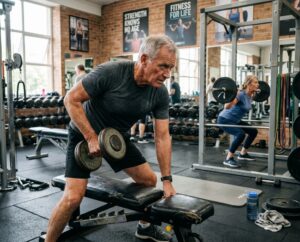
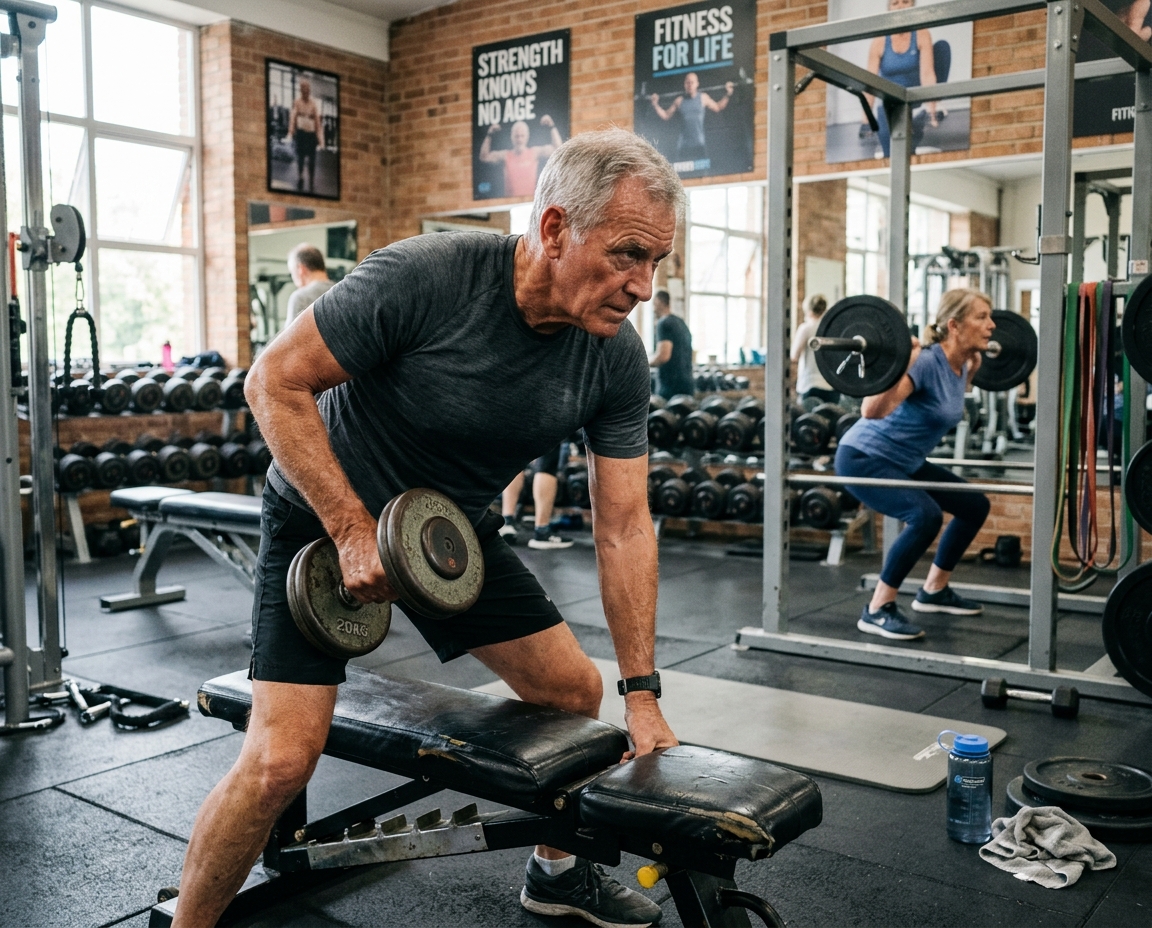
Among exercise modalities, resistance training (progressive strength training) produces the most consistent and clinically meaningful improvements in muscle strength, power and functional performance in older adults. Randomized trials and meta-analyses show that supervised resistance programs increase handgrip and knee-extension strength, improve gait speed and enhance tasks of daily living; many participants also gain measurable lean mass. Effective programs use progressive overload (increasing load, volume or repetitions over time), target major muscle groups, and are performed regularly (commonly 2–3 times per week). Resistance training also confers neuromuscular benefits — improving motor unit recruitment and coordination — which are critical for maintaining functional independence. For older adults diagnosed with sarcopenia, resistance training is therefore the cornerstone of therapeutic exercise.
Are All Exercises Created Equal in Fighting Muscle Decline?
Not all forms of exercise offer the same magnitude or type of benefit for aging muscle. Aerobic (endurance) exercise excels at improving cardiovascular fitness and mitochondrial health and can help preserve oxidative capacity, but on its own it is less effective than resistance training at increasing muscle mass or maximal strength. Balance, flexibility and power-focused training (high-velocity, lower-load movements) address other components of functional performance — for example rapid force production needed to arrest a fall. Multimodal programs that combine resistance work with aerobic conditioning and functional/balance exercises tend to produce the broadest benefits for health and function. Importantly, combining resistance exercise with targeted nutritional strategies (adequate daily protein and, where appropriate, leucine-rich supplements or timed protein ingestion) yields larger gains in strength and lean mass than exercise alone in many studies. Thus, exercise selection should be intentional: resistance training as the primary countermeasure to sarcopenia, complemented by aerobic and neuromotor activities for whole-person resilience.
Conclusion: Embracing an Active Lifestyle for Longevity
Muscle aging is not an immutable fate. Decades of clinical and mechanistic research converge on a clear message: regular, progressive resistance training — supported by adequate protein and integrated with aerobic and balance work — is the most effective strategy to preserve muscle mass, strength and independence into older age. Practical recommendations for most older adults include structured resistance sessions 2–3 times per week targeting all major muscle groups, incorporation of moderate aerobic activity on additional days, attention to balance and mobility training, and meeting protein needs distributed across meals. As always, exercise programs should be individualized and begun or progressed under professional guidance when there are medical conditions or mobility limitations. Embracing an active lifestyle is a powerful, evidence-based investment in functional longevity.
The content is provided by Harper Eastwood, Lifelong Health Tips